Kaishun Team | Kaishun Engineering Machinery Product Specialist | Published July 20, 2026
A single flat number by capacity doesn’t reflect how concrete mixer machines are actually quoted. Real export pricing moves with five variables: capacity, engine option, loading configuration, order quantity, and destination. This article breaks down each one using Kaishun’s self-loading mixer range as the reference point.
Why Doesn’t a Concrete Mixer Price Come in One Chart?
Search “concrete mixer machine price” and you’ll find pages that list a single dollar figure next to each capacity tier — as if a 3.5m³ mixer always costs the same regardless of who builds it or where it ships. That approach works for a retail cement mixer bought off a shelf. It doesn’t work for construction-grade self-loading equipment sourced for an export order, where the engine brand, hydraulic loading system, and destination compliance requirements change the build before a quote is even possible.
Manufacturers quoting real orders price against configuration, not against a capacity label alone. Kaishun’s own pricing language reflects this directly: price is quoted according to model, configuration, engine option, quantity, and destination, and final pricing depends on the specific project requirements submitted with the request. There isn’t a public price list to skim — every quote starts from a build sheet.
What Configuration Variables Actually Move the Price?
The table below lists the variables that change a quote, using Kaishun’s self-loading concrete mixer series as the reference data set.
| Cost Driver |
What It Covers |
Kaishun Reference Data |
| Capacity |
Output volume per mixing/loading cycle |
0.32m³ to 6.5m³ across 11 self-loading models |
| Engine option |
Powerplant driving the loading arm and drum |
RATO R740-1 on the 0.32CBM crawler model; diesel engine standard across the broader self-loading range |
| Loading type |
How raw material enters the drum |
Self-loading arm as the standard configuration across the entire catalog — there’s no separate stationary batching line in this series |
| OEM/ODM configuration |
Branding and component-level customization |
Paint color, logo, and component options adjustable through Kaishun’s OEM/ODM program |
| Order quantity |
Per-unit sensitivity to order size |
Quoted per request; a single-unit order and a multi-unit fleet order are not priced off the same baseline |
| Destination |
Freight mode, port, and import compliance |
Confirmed per shipment before final quoting |
Two of these — capacity and engine option — are usually visible on a spec sheet. The other four are the ones a flat price chart can’t capture, and they’re often where the real cost difference between two “identical” capacity mixers shows up.
How Does Capacity Break Down Across the Model Range?
Kaishun’s self-loading concrete mixer series runs eleven models between 0.32m³ and 6.5m³:1.0.32CBM Crawler Self-Loading Concrete Mixer
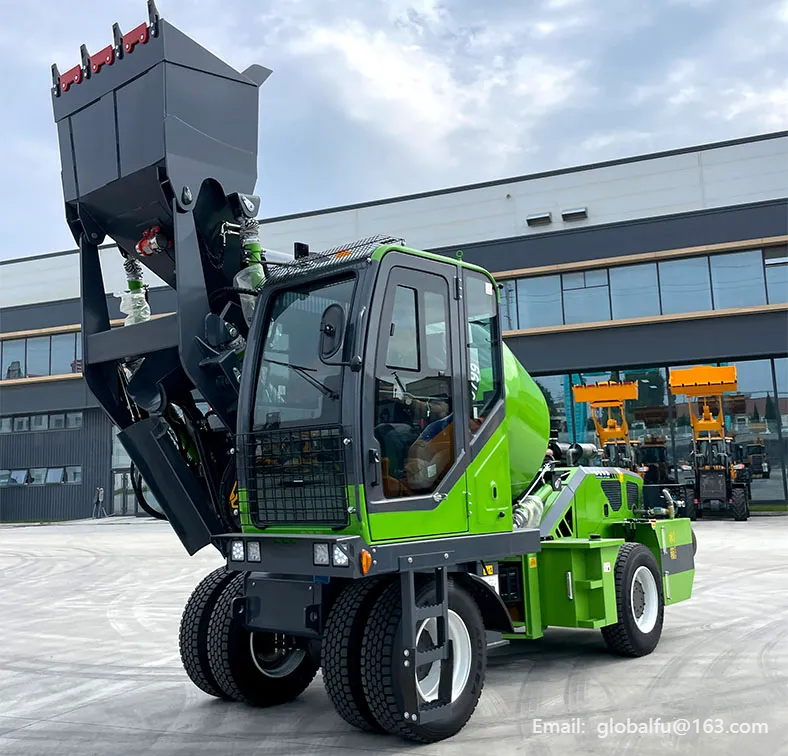
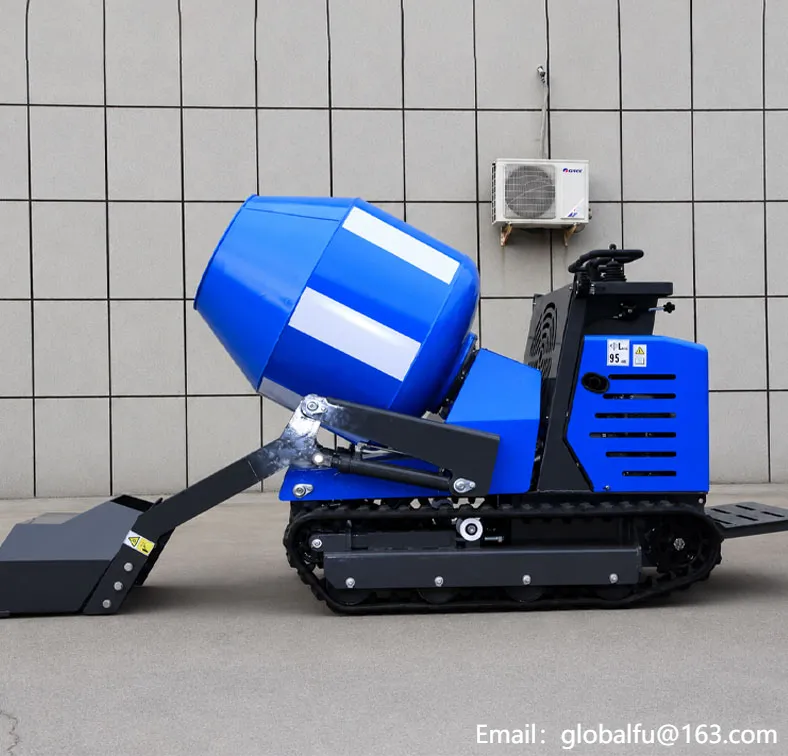
Every model in this range is built to load, mix, transport, and discharge concrete as a single machine, which is the core functional difference from a towed or stationary drum mixer. The 0.32CBM model uses a crawler undercart and a RATO R740-1 engine — a track-driven configuration suited to uneven or confined sites. The rest of the range runs on diesel engines sized to the larger drum volumes, matching applications from rural and residential construction up through road, bridge, mining, and municipal infrastructure work.
Where Do Buyers Get the Capacity Comparison Wrong?
The most common mistake in price comparisons is treating capacity as a stand-in for total cost, then being surprised when two mixers labeled at the same cubic-meter output come back with different quotes. Capacity tells you drum volume — it says nothing about whether the loading arm is hydraulic or manual, whether the engine is a base diesel unit or a branded option, or whether the buyer needs OEM paint and logo work added to the build. Two 3.5m³ units can carry meaningfully different price tags once engine option and customization are factored in, and neither number is wrong — they’re just answering different questions.
A second misconception worth flagging: self-loading capacity and stationary batching plant output capacity aren’t measured the same way, so cross-shopping a self-loading mixer against a stationary plant listing by “cubic meters” alone will misstate true throughput.
What Do Buyers Give Up and Gain With Self-Loading Configuration?
Self-loading equipment isn’t the cheaper option in every scenario, and it’s worth stating the trade-off directly rather than only listing benefits.
What you gain:
- One machine handles loading, mixing, transport, and discharge, cutting the labor and equipment coordination needed on a jobsite with limited crew capacity
- Track or wheel mobility means the unit can reposition across a site instead of concrete being trucked to a fixed batching point
- Configuration flexibility through OEM/ODM options lets a fleet buyer standardize color and branding across mixed equipment orders
What you give up:
- A self-loading unit carries more mechanical complexity (hydraulic loading arm, integrated drive) than a simple towed drum mixer, which means more components that can require field maintenance
- On a site with a fixed, high-volume, continuous pour requirement, a stationary batching plant with a dedicated feed system will typically outperform a self-loading unit on sustained throughput
- Crawler configurations, like the 0.32CBM model, trade road-speed mobility for uneven-terrain capability — not the right choice if the job requires moving frequently between distant sites on paved roads
How Do You Actually Get an Accurate Quote?
- Identify the required output capacity based on daily concrete volume needed, not just the job’s total project size
- Decide whether crawler mobility (uneven terrain) or wheeled mobility (road transfer) fits the site conditions
- Specify engine preference if the project has a fixed brand or fuel-type requirement
- List any OEM/ODM requirements — paint color, logo, or component substitutions — at the time of the request, not after a quote is issued
- Confirm destination port and shipping terms, since freight and import compliance are priced separately from the machine itself
- Request the quote directly from Kaishun with these five inputs attached, since none of them are captured by a published price list
How Does This Compare to the Typical Price-List Approach?
Compared to listings that publish a flat number per capacity tier, this configuration-based approach takes longer to produce a number but reflects what actually happens once an order moves past the browsing stage. A flat price list answers “what does a 3.5m³ mixer cost” with a single figure; a configuration-based quote answers “what does a 3.5m³ mixer cost for this job, this engine, this destination” — which is the version of the question that determines what actually gets invoiced.
FAQ
Q: Does Kaishun publish a fixed price list by capacity?
A: No. Price is quoted according to model, configuration, engine option, quantity, and destination, and buyers are asked to contact Kaishun directly for a customized quotation.
Q: Is a bigger capacity mixer always more expensive?
A: Not necessarily on its own. Capacity is one input among several — engine option, loading configuration, OEM customization, and destination shipping terms can shift two same-capacity quotes apart, or bring a larger-capacity quote closer to a smaller one.
Q: What’s the fastest way to get a real number instead of an estimate?
A: Submit capacity requirement, mobility type (crawler or wheeled), engine preference, any OEM/ODM needs, and destination port together in one request — partial information is the main reason quotes take longer than expected.
Q: Are certificate numbers for individual mixer models publicly available?
A: Not on the reviewed site pages. ISO 9001 and CE are stated at the company/category level; product-specific certificate documentation should be requested directly if the import destination requires it.











 July 20, 2026