Many buyers need concrete onsite, but the wrong mixer can slow work, waste labor, and increase project cost.
A self loading concrete mixer is a mobile concrete mixer that can load materials, mix concrete, transport it, and discharge it onsite. It helps contractors reduce labor, improve flexibility, and produce concrete closer to the working area.
Choosing the right machine is not only about price. Buyers also need to compare capacity, site condition, concrete demand, maintenance needs, and supplier support. For dealers, contractors, rental companies, and project buyers, the right self loading concrete mixer can become a practical machine for many jobsites.
What Is a Self Loading Concrete Mixer?
Many contractors need concrete in remote or changing jobsites, but a normal mixer may not solve loading, mixing, and transport problems together.
A self loading concrete mixer is a concrete mixer machine that combines material loading, mixing, transport, and discharge in one mobile unit. It is commonly used for small and medium construction projects, rural roads, infrastructure work, and remote jobsites.
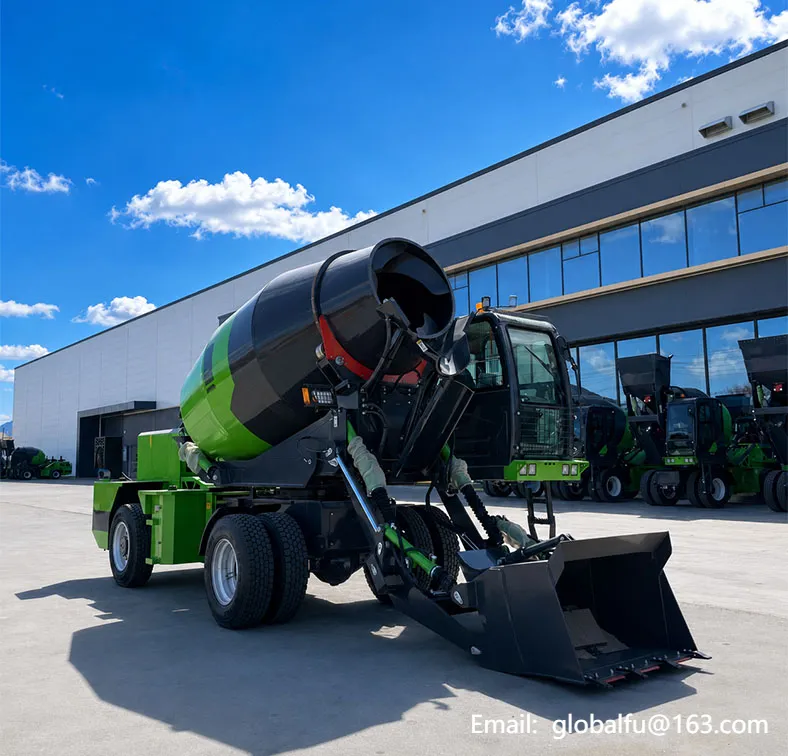
A self loading concrete mixer is different from a simple cement mixer. It is also different from a normal concrete mixer truck. The machine usually has a loading bucket, a mixing drum, an operator cabin, a water system, and a discharge system. The operator can use the bucket to load aggregates, cement, and other materials. The machine then mixes concrete while moving or standing onsite.
This design is useful for buyers who need more control over concrete production. A contractor may not always have a batching plant near the project. A ready-mix truck may also be hard to schedule in rural areas, road projects, farm projects, or small infrastructure sites. A self loading concrete mixer can help solve this problem because it brings mixing ability closer to the working area.
For B2B buyers, this machine has strong sourcing value. Equipment dealers can sell it to contractors who need flexible concrete production. Rental companies can use it for different short-term projects. Project buyers can use it when concrete demand changes from day to day.
Common Application Scenarios
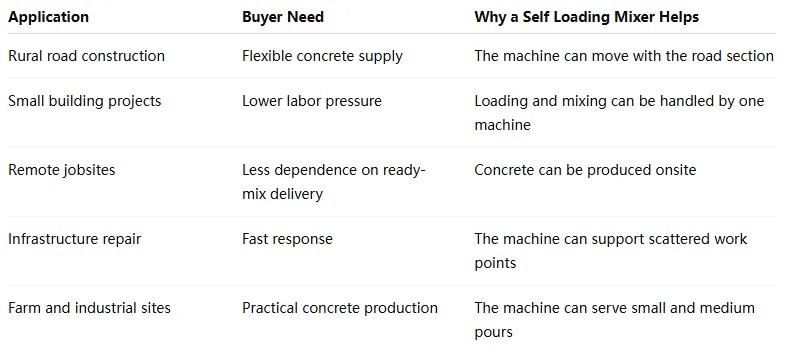
When buyers compare machines, they should not only ask, “What is the lowest price?” They should ask whether the mixer fits the project size, site access, operator skill, spare parts plan, and daily concrete demand. Kaishun can help buyers compare machine options based on the real working condition before ordering.
What Is the Difference Between a Self Loading Concrete Mixer and a Transit Mixer?
Many buyers compare these two machines, but they may choose the wrong one if they only look at the drum shape.
A self loading concrete mixer can load raw materials and mix concrete onsite. A transit mixer mainly transports ready-mixed concrete from a batching plant to the project site. The best choice depends on concrete source, project location, distance, and daily demand.
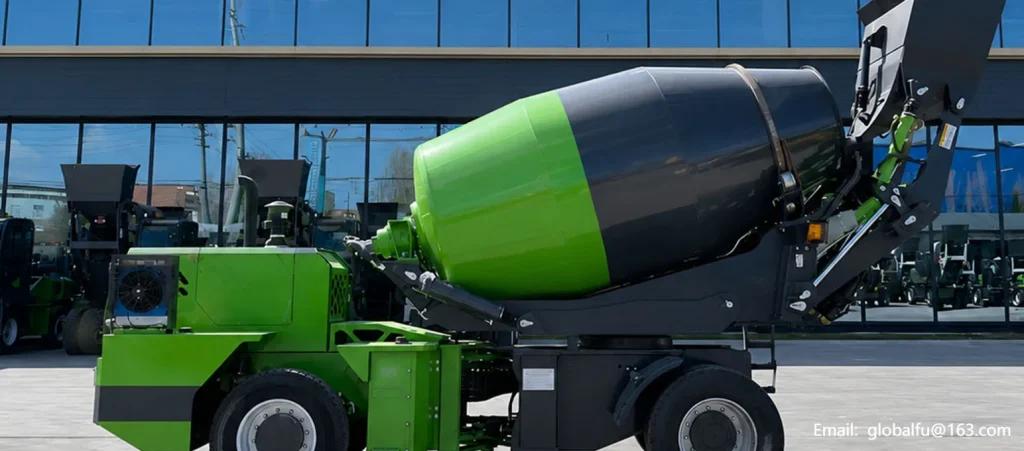
A transit mixer is designed for concrete transport. It usually receives ready-mixed concrete from a batching plant. Then it keeps the concrete moving during transport and delivers it to the jobsite. This machine works well when the project is close to a stable batching plant. It is also suitable when large concrete volume must be delivered in a planned schedule.
A self loading concrete mixer is more independent. It does not depend on a batching plant in the same way. The machine can load sand, stone, cement, and water onsite or near the site. It can mix concrete and discharge it where the project needs it. This makes it useful for scattered jobsites, rural roads, small bridges, farm construction, and remote projects.
For contractors, the decision is often about project control. If concrete delivery is delayed, workers may wait onsite. If the road is poor, ready-mix delivery may become difficult. If the project has many small pouring points, a transit mixer may not be efficient. In these cases, a self loading concrete mixer truck can provide more flexibility.
Dealers should explain this difference clearly to local customers. A contractor who needs onsite flexibility may prefer a self loading mixer. A contractor who already has strong batching plant access may prefer transit mixers. Rental companies may also prefer self loading concrete mixers because one machine can serve different customer groups.
Kaishun does not recommend choosing equipment only by machine name. We recommend that buyers share jobsite distance, concrete demand, road condition, and project type. This allows the machine selection to match real use instead of only matching a keyword.
What Capacity of Self Loading Concrete Mixer Do Buyers Need?
Many buyers ask for a large capacity first, but the largest mixer is not always the best choice for every project.
Buyers should choose self loading concrete mixer capacity based on daily concrete demand, project size, road condition, working space, transport distance, and pouring frequency. Exact capacity should be confirmed according to the selected model and project requirement.
Capacity is one of the most important points when sourcing a self loading concrete mixer. But capacity should not be selected alone. A larger mixer may produce more concrete per batch, but it may also need more working space, stronger road access, and better operator control. A smaller mixer may be easier to move, but it may not meet daily output needs for bigger projects.
For contractors, the first step is to estimate how much concrete the project needs each day. The second step is to check how many working hours are available. The third step is to consider how far the machine must move between material loading points and pouring points. These factors affect real working efficiency more than the drum capacity alone.
For equipment dealers and distributors, capacity planning also affects sales strategy. Some customers want a machine for small housing projects. Some buyers need machines for rural roads. Some buyers want rental machines for different contractors. These customers may need different machine sizes. A dealer can reduce customer complaints by helping buyers match capacity with real work.
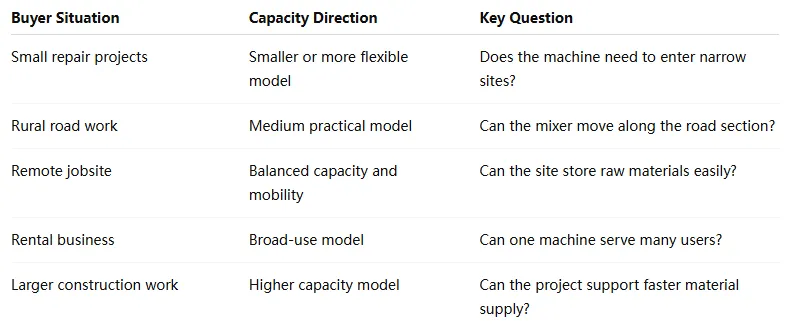
Buyers should also consider the loading bucket, water supply, drum mixing performance, discharge height, tire type, and steering system. These details affect real output. A machine with a suitable capacity but poor site adaptability may still create problems.
Kaishun can help buyers compare capacity needs from a practical sourcing view. We may ask buyers about project type, concrete use, road condition, and local operation habits. This helps buyers avoid buying a machine that is too small for output or too large for the site.
Exact model capacity, engine option, drum data, and technical details should always be confirmed before order. This protects the buyer and the supplier because both sides can align the machine with the project.
How Long Can a Self Loading Concrete Mixer Last?
Many buyers care about lifespan because a mixer is not a one-time purchase. Poor maintenance can shorten machine value fast.
The lifespan of a self loading concrete mixer depends on machine quality, working intensity, operator habits, maintenance schedule, spare parts availability, and jobsite conditions. Buyers should confirm maintenance requirements and service support before purchase.
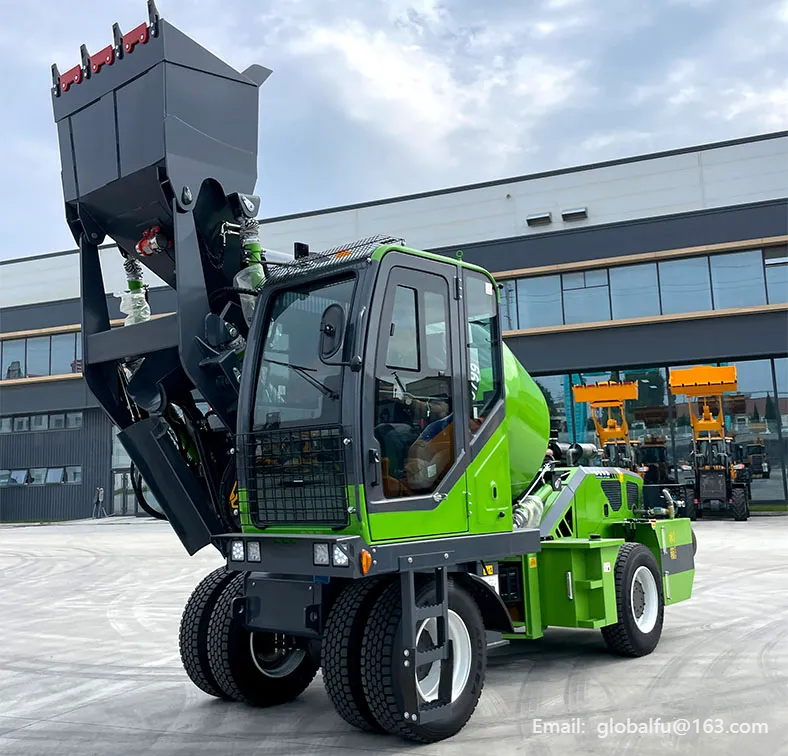
A self loading concrete mixer works in tough conditions. It handles heavy materials, water, cement, aggregates, vibration, movement, loading, mixing, and discharge. Because of this, lifespan depends on both machine build and daily use. A good machine can still fail early if users ignore cleaning, lubrication, hydraulic inspection, and basic maintenance.
Concrete can harden inside the drum or around discharge parts if the machine is not cleaned after work. Hydraulic parts may wear faster if oil quality is ignored. Tires and chassis may face higher stress on rough ground. The operator may also affect service life. Smooth operation, correct loading, and careful driving can reduce damage.
For B2B buyers, lifespan should be viewed as business value. Contractors want stable project performance. Rental companies want longer use and fewer service calls. Dealers want fewer complaints from local customers. Importers want machines that support repeat orders and market trust. So buyers should ask suppliers about maintenance points before purchase.
Lifespan-Related Selection Checklist
- Check whether the machine structure fits the working environment.
- Confirm the main maintenance points before order.
- Ask about spare parts availability.
- Train operators to clean the mixer after use.
- Avoid overloading the machine beyond its design.
- Use suitable fuel, oil, and water based on local conditions.
- Keep records for service and inspection.
- Confirm technical support channels with the supplier.
Buyers should also prepare spare parts for local service. This is especially important for dealers and rental companies. A small part can stop a machine if it is not available at the right time. Spare parts planning can protect the equipment investment.
Kaishun supports buyers with practical machine selection and cooperation discussion. We encourage buyers to share their project environment, expected daily use, and maintenance ability. This helps us recommend a more suitable machine direction. Exact lifespan should not be promised without knowing the real working condition, but good selection and proper maintenance can help buyers get better long-term value.
Conclusion
A suitable self loading concrete mixer should match project demand, site condition, capacity needs, budget logic, and long-term service planning.











 June 15, 2026