DG set maintenance on a jobsite comes down to a short pre-start walk-around each day, a weekly check of fluids, batteries and filters, and hour-based servicing taken from the engine maker’s manual. Record every check in a log so the next operator can see what was done and when.
Which sets this checklist applies to
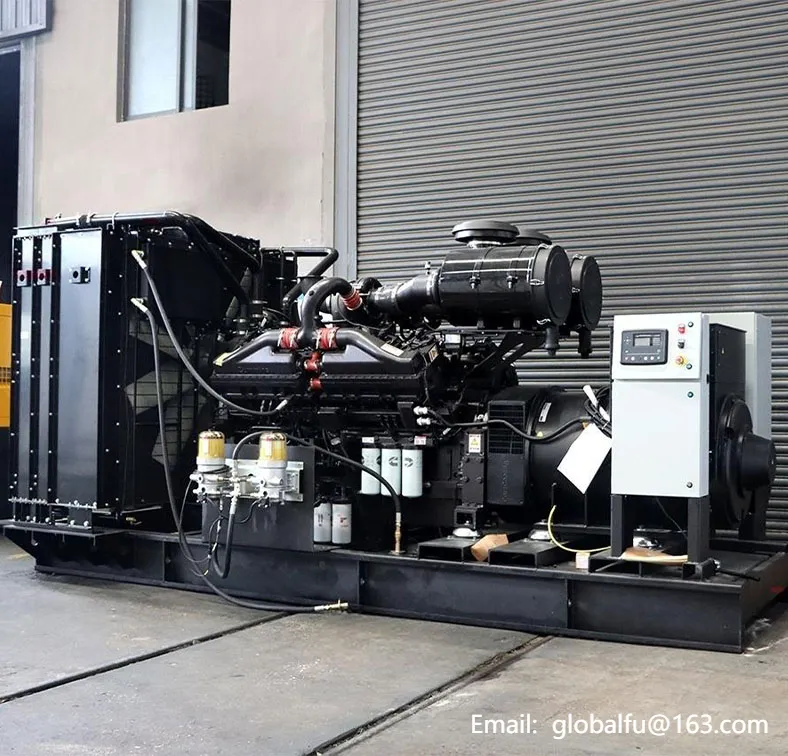
The steps below apply to diesel generator sets fitted with Cummins, Weichai, Yuchai or Perkins engines, in open, silent, trailer or containerized configurations. The checks are the same in principle across brands. What changes is the service interval, the filter part numbers and the fluid specification.
| Diesel Set |
Frequency / Voltage |
Prime Power Range |
| Cummins |
50Hz / 400V |
16–2500kW |
| Cummins |
60Hz / 480V |
20–3000kW |
| Weichai |
50Hz / 400V |
20–3000kW |
| Weichai |
60Hz / 480V |
20–3000kW |
| Yuchai |
50Hz |
30–3000kW |
| Perkins |
50Hz / 400V |
8–1800kW |
| Perkins |
60Hz / 480V |
8–1350kW |
| Trailer Diesel Set |
Towable Design |
50–1000kW |
A 60Hz Yuchai diesel set is also part of the range, but no power range for it is listed in Kaishun’s current materials, so request it at the quotation stage.
Compared with sets sold with a single engine option, a supplier that offers four engine brands lets you pick the brand whose service network is closest to your site. On a remote jobsite, that choice affects maintenance more than most people expect.
Set up the log and the manual first
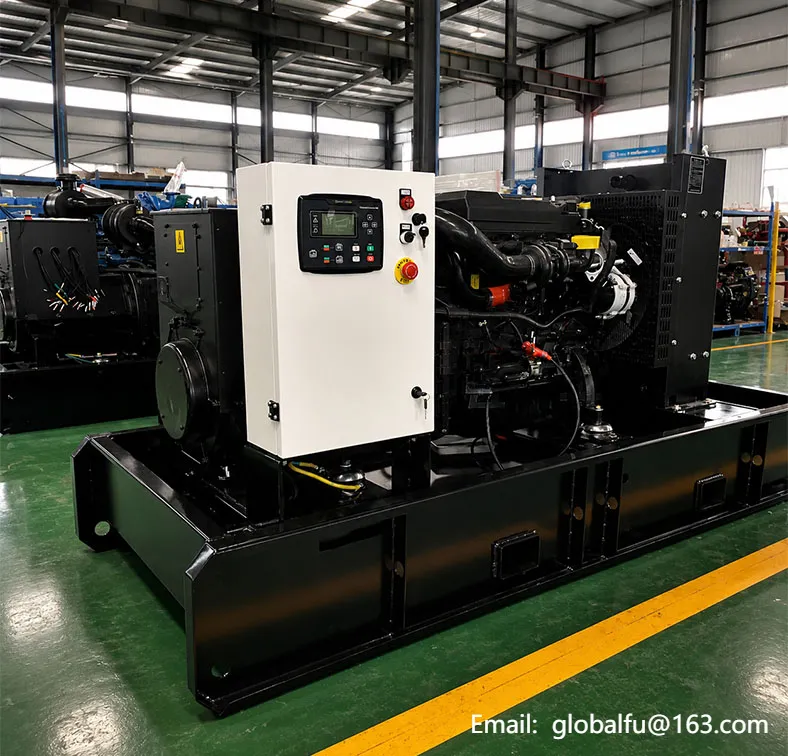
Before the first start, do two things. Get the engine’s operation and maintenance manual for the exact model on your set, and open a service log with running hours, date, task and initials.
The log matters for the same reason documented records matter under the ISO 9001 quality management standard, which Kaishun’s production system follows: a task nobody wrote down cannot be verified later. When a filter is overdue, the log shows it in seconds instead of relying on memory.
The daily walk-around (before each start)
Do these with the engine stopped and cold. Each step has a “done when” condition, so a different person can confirm it.
- Engine oil level. Pull the dipstick on level ground. Done when the level sits between the min and max marks.
- Coolant level. Check the expansion tank, never the radiator cap on a hot engine. Done when the level meets the cold-fill mark.
- Fuel level and water. Top up the tank, then drain any water from the fuel filter or water separator if one is fitted. Done when the drained fuel runs clear.
- Leaks. Look under the set and around hose joints, filters and the fuel lines. Done when the ground and fittings are dry.
- Battery terminals. Check that they are tight and free of white or green crust. Done when the terminals do not move by hand.
- Air intake and radiator. Clear dust, leaves and packing material. Done when you can see through the radiator fins.
- Exhaust and ventilation path. On silent and containerized sets, check that louvers and the hot-air outlet are open and unobstructed. Done when nothing blocks either opening.
After starting, watch the gauges for the first few minutes: oil pressure should come up promptly, coolant temperature should rise steadily, and the voltage and frequency should settle at the rated values (400V/50Hz or 480V/60Hz, depending on the set). Stop the set and investigate if any reading is wrong.
Weekly checks
- Check the air filter restriction indicator or inspect the element. On dusty sites this is the check most likely to fall due early.
- Check the fan belt tension and condition.
- Check the battery charge. If the set starts slowly, test the battery before blaming the engine.
- Test the emergency stop and any protection alarms if the set has them.
- Inspect cable lugs and the output breaker for heat discoloration.
Hour-based servicing
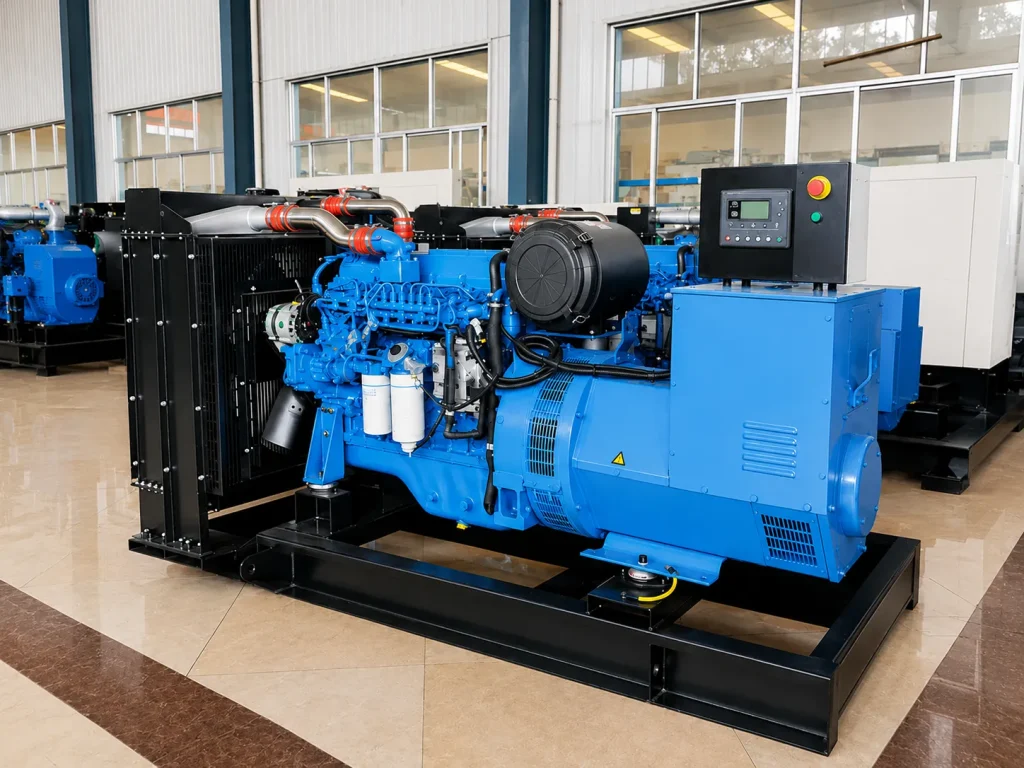
Oil, oil filter, fuel filter and coolant changes follow running hours, not calendar weeks. Take the intervals from the engine maker’s manual for your model, and record the hour reading when each task is done. Kaishun’s materials do not publish one interval that fits all four engine brands, and inventing one would be a mistake, so the manual is the reference.
If the site is far from the nearest service point, buy a filter kit for at least one service cycle before the set leaves the yard. This one decision separates a planned stop from a stop that waits weeks for parts.
Parts, quotation and what to ask before the set ships
Price is quoted according to model, configuration, engine option, quantity and destination. Contact Kaishun for a customized quotation. When you request one, ask for the engine model number, the manual for that model and the filter part numbers alongside the set itself. Then you can compare the maintenance workload between engine brands before you commit to one.
Two topics this article does not cover, and which are worth a separate look: how to size a set to a jobsite’s actual load, and how to store diesel on a remote site so the fuel stays clean between deliveries.
FAQ
How often should I change the oil on a diesel generator set?
By running hours, at the interval printed in the manual for your engine model. Intervals differ between Cummins, Weichai, Yuchai and Perkins engines, and they also shorten in dusty or very hot conditions.
Is the maintenance the same for open and silent sets?
The engine checks are the same. A silent or containerized set adds canopy ventilation and louver checks, because blocked airflow raises coolant temperature.
What should I check on a trailer diesel generator set that I do not check on a fixed one?
The hitch, tires, lights and stabilizing supports before each move, plus the securing of cables and panels for transport.
Do I need different spare parts for each engine brand?
Yes. Filters and belts are engine-specific, so confirm the part numbers for your engine model when you request the quotation.
Can I run the set with a warning light on until the next service?
No. Stop the set and find the cause first. A warning that clears after a refill still belongs in the log.











 September 28, 2026