Not every “concrete mixer for sale” listing is the same machine. Search results mix small manual drum mixers, towable batch mixers, and self-loading units that load, mix, transport, and discharge concrete on their own. Before comparing prices, confirm which category actually fits your job site.
1. Decide Whether You Need a Self-Loading Machine or a Standalone Drum Mixer
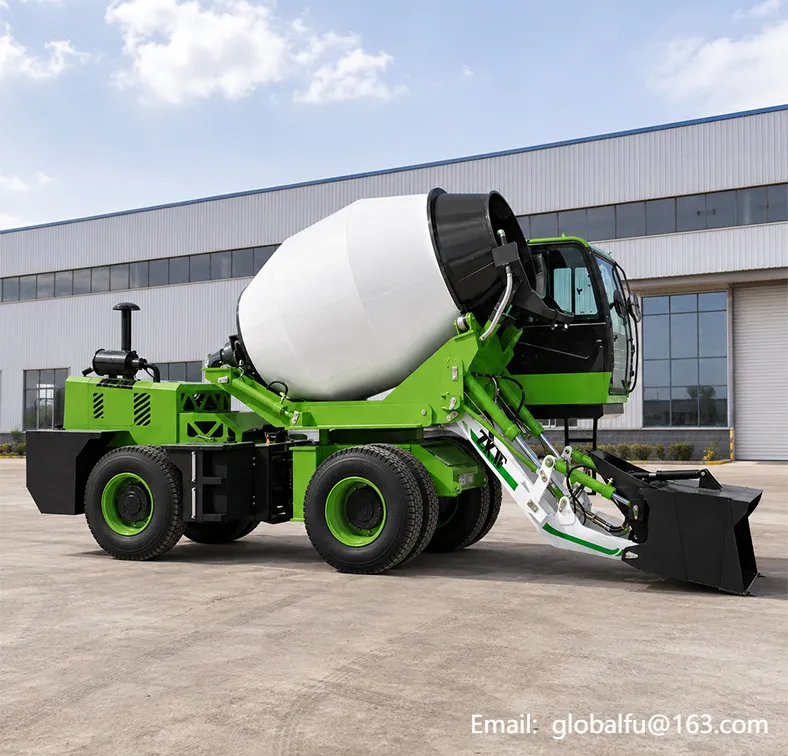
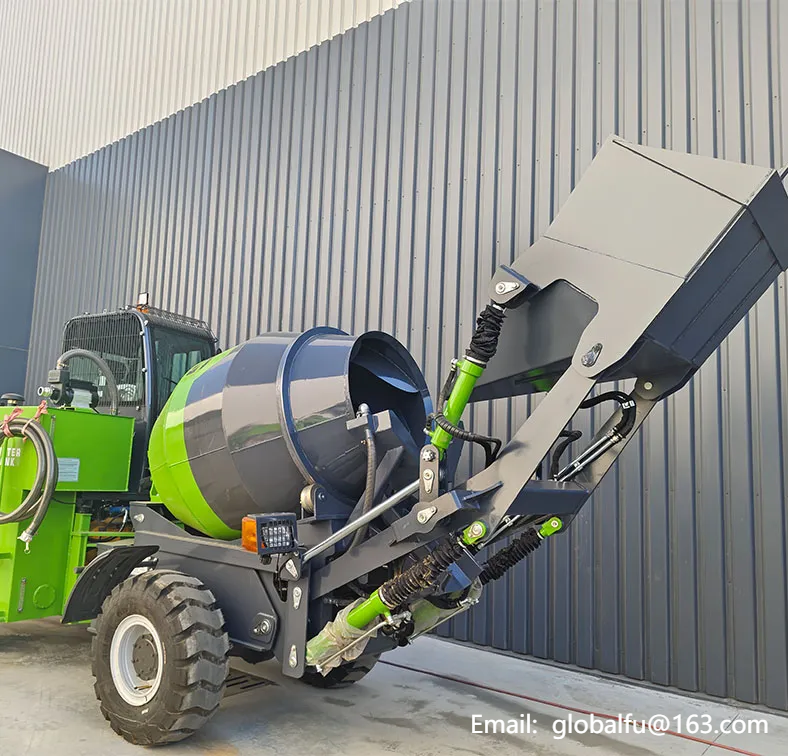
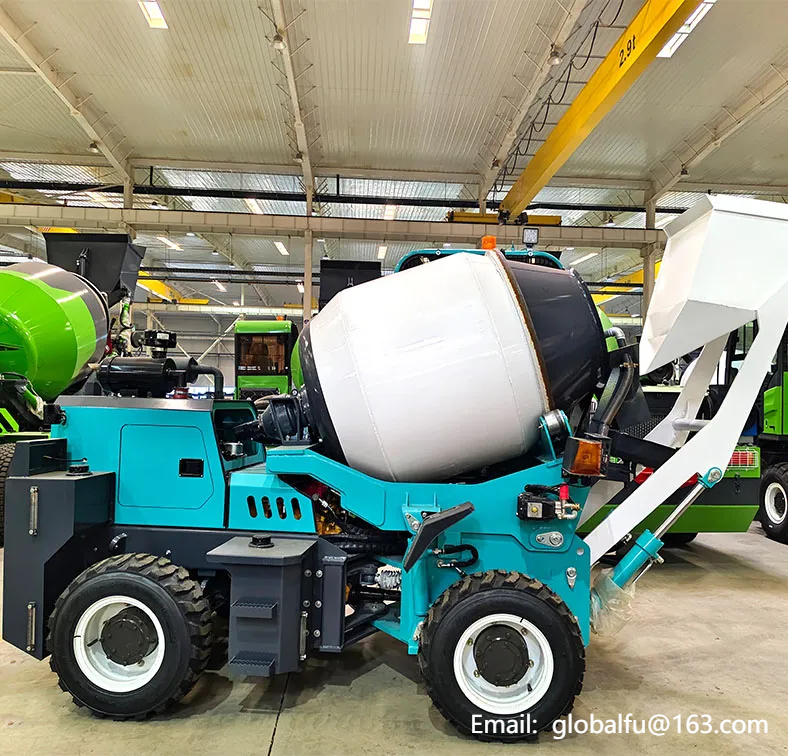
A basic drum mixer only mixes — you still need a separate loader or manual shoveling to feed it aggregate. A self-loading concrete mixer combines loading, mixing, water dosing, transporting, and discharging in one chassis. For rural construction, road and bridge work, or mining and tunneling sites where hauling a second loader isn’t practical, the self-loading category is the relevant comparison, not the cheapest drum mixer you find online.
2. Match Output Capacity to Your Daily Pour Volume, Not the Machine’s Sticker Number
Self-loading mixers in this class range from 0.32m³ up to 6.5m³ per batch. Buying oversized capacity for a small residential job wastes fuel and maneuvering room; undersized capacity on a bridge or municipal project means more batch cycles and slower pours. Calculate your target daily concrete volume first, then work backward to batch size and cycle time.
3. Check the Engine and Power Configuration Against Your Site Conditions
Engine choice affects both terrain performance and fuel logistics. The 0.32CBM crawler self-loading model, for example, runs on a RATO R740-1 engine and is built for tracked mobility on soft or uneven ground, while larger self-loading models in the range use diesel power for wheeled site-to-site movement. If your site has steep grades, loose soil, or confined access, crawler mobility matters more than raw capacity.
4. Ask Whether the Drum Design Suits Your Aggregate and Slump Requirements
Not every listing specifies drum geometry or discharge angle, and this detail changes how well the mixer handles specific aggregate sizes and mix designs. Request drum dimensions and discharge height directly from the supplier rather than assuming one drum design works across the full 0.32–6.5m³ range.
5. Confirm What Certification Actually Covers
A generic “certified” claim in a listing tells you little. Kaishun’s construction machinery line carries ISO 9001 quality management certification and CE marking at the company and product-category level, following the ISO 9001 quality management standard. Ask any supplier for the specific certificate scope — company-wide versus product-line-specific — before treating certification as a differentiator.
6. Verify Customization Options If You’re Buying for a Fleet or Dealer Network
If you’re procuring multiple units, ask what can be customized: corporate paint color, logo application, and component or configuration adjustments (OEM/ODM). Fleet buyers who skip this step often end up repainting or retrofitting machines after delivery, which adds cost the original quote didn’t include.
7. Get Shipping and Consolidation Details in Writing
Freight cost swings order economics as much as unit price does. Ask whether your order can be consolidated into flat-rack containers with other equipment (wheel loaders, spare parts) to cut per-unit shipping cost, and whether the supplier has overseas parts centers near your project — Kaishun currently operates 10+ overseas spare parts centers across its export markets. That single aggregate figure is one of only two industry-scale numbers used in this article; treat it as a logistics data point, not a marketing claim.
8. Don’t Accept a Vague Price Quote — But Don’t Expect a Fixed One Either
Legitimate concrete mixer pricing depends on model, configuration, engine option, quantity, and destination — it is not a fixed catalog number, and suppliers who publish flat online prices for this equipment category are usually quoting a stripped configuration. Contact the manufacturer for a customized quotation, and expect final pricing to depend on your specific configuration and project requirements rather than a published range.
Self-Loading Concrete Mixer Specs at a Glance
| Model |
Output Capacity |
Engine |
Typical Application |
| 0.32CBM Crawler Self-Loading |
0.32 m³ |
RATO R740-1 |
Confined or uneven-terrain rural sites |
| 0.5CBM Self-Loading |
0.5 m³ |
Diesel |
Residential and small-batch work |
| 0.8–1.8CBM Self-Loading |
0.8–1.8 m³ |
Diesel |
Rural and residential construction |
| 2.0–3.8CBM Self-Loading |
2.0–3.8 m³ |
Diesel |
Road, bridge, and municipal infrastructure |
| 4.0CBM Self-Loading |
4.0 m³ |
Diesel |
Infrastructure, mining, and tunneling |
| 5.5–6.5CBM Self-Loading |
5.5–6.5 m³ |
Diesel |
Larger-volume infrastructure and mining projects |
A Common Misconception Worth Correcting
Buyers searching “concrete mixer for sale” often assume any listed mixer will replace both a loader and a mixer on site. Most listings under roughly 0.5m³ in general search results are manual or towable drum mixers with no self-loading bucket — they still require a separate loader or hand-loading. If your job needs one machine to handle loading, mixing, and discharge without a second piece of equipment, confirm the listing specifically describes a self-loading design before requesting a quote.
Trade-Offs to Weigh Before Buying
Advantages of self-loading models: fewer machines on site (no separate loader needed), faster batch-to-batch cycling on rural or remote projects, and a capacity range wide enough to cover residential through mining-scale pours.
Trade-offs to plan for: a self-loading unit costs more upfront than a basic towable drum mixer, and crawler configurations trade road speed for terrain capability — they’re not the right choice if you need to move the machine quickly between distant sites on paved roads.
Compared with buying a standalone drum mixer and a separate loader from two different suppliers, a self-loading unit consolidates both functions into one purchase, one shipping line item, and one after-sales contact — worth weighing against the higher single-unit price.
FAQ
What’s the difference between a “concrete mixer for sale” and a “self-loading concrete mixer”?
A generic drum mixer only mixes; it needs a separate loader to feed material in. A self-loading concrete mixer loads aggregate, mixes, transports, and discharges from one machine, which is the category most relevant for job sites without a dedicated loader.
What capacity range should I look at for a small-to-mid infrastructure project?
Depending on daily pour targets, models in the 2.0m³–4.0m³ range cover most road, bridge, and municipal work; larger 5.5m³–6.5m³ units suit higher-volume mining or infrastructure projects.
Is there a fixed price for these machines?
No. Pricing depends on model, configuration, engine option, quantity, and destination. Suppliers should provide a customized quotation rather than a flat published price.
Do these mixers come with certification?
Kaishun’s construction machinery line carries ISO 9001 quality management certification and CE marking at the company and product-category level. Ask for the specific certificate scope for the model you’re buying.











 September 23, 2026