Kaishun Engineering Team | Construction Machinery Content Team | Published: September 2026
A poorly matched wheel loader can leave a construction crew waiting for material, burn more fuel than necessary, or struggle with the wrong attachment. Choosing by price or horsepower alone creates avoidable costs. The better approach is to match the loader’s size, lift capacity, bucket, terrain capability, and attachments to the actual job.
A wheel loader is a wheeled loading machine designed to scoop, lift, carry, and load materials such as aggregate, soil, sand, gravel, and construction debris. The best wheel loader for your project depends on the required lift capacity, bucket size, operating environment, travel distance, ground conditions, and whether you need additional wheel loader attachments for material handling, pallet work, landscaping, or other applications.
What Is a Wheel Loader and How Does It Work?
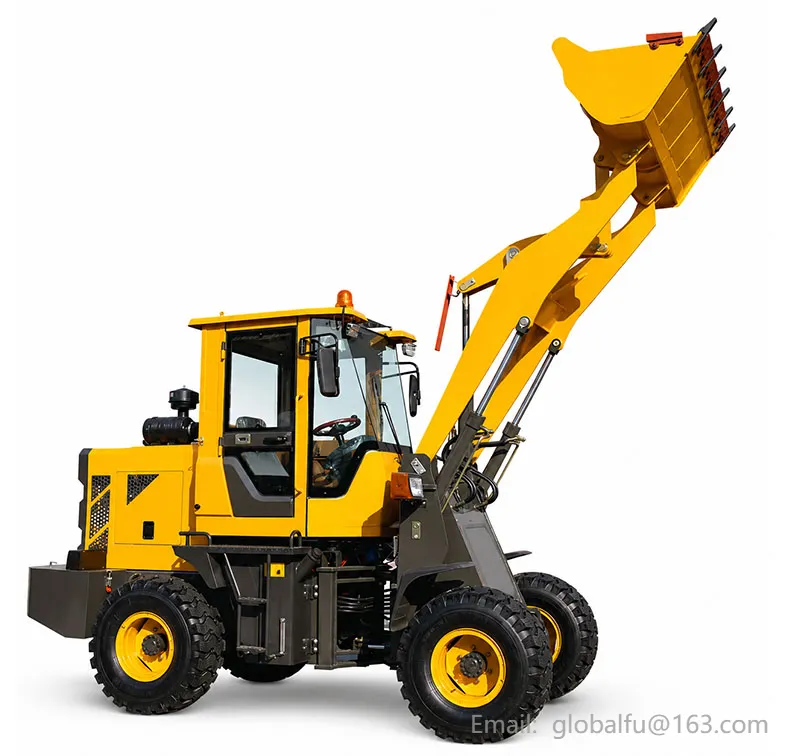
A wheel loader is one of the most widely used machines in modern construction and material-handling operations. Also called a wheeled loader, front loader, or front end loader, it uses a front-mounted bucket and a hydraulic lifting system to collect material, raise it, and place it into a truck, stockpile, hopper, or other location.
The basic working cycle is simple:
Drive → scoop → lift → carry → dump → return
That simple cycle makes a wheel loader useful across many industries. Construction contractors use loaders for earthmoving and aggregate handling. Quarry operators move stone and gravel. Agricultural businesses handle feed and bulk materials. Industrial facilities use them for cleanup and material movement.
The biggest advantage is mobility. A wheel loader can travel between working areas much more easily than many tracked machines. Its wheeled design provides good maneuverability on roads, hard yards, asphalt or concrete, and established job sites.
Modern loaders are also designed around operator productivity. A well-matched machine can move large amounts of material while reducing unnecessary travel, loading time, and manual handling.
What Are the Main Types of Wheel Loaders?
There are many types of loaders, but wheel loaders can broadly be grouped by size, operating weight, lift capacity, and intended application.
The most common categories include:
| Wheel Loader Type |
Typical Strength |
Common Applications |
| Compact wheel loader |
Small footprint and maneuverability |
Landscaping, municipal work, light construction |
| Small wheel loader |
Compact material handling |
Small construction sites, agriculture |
| Medium wheel loader |
Balanced capacity and mobility |
General construction and aggregate |
| Large wheel loader |
High productivity and lift capacity |
Quarrying, mining, large construction |
| Heavy-duty wheel loader |
High-volume material movement |
Mining, quarry, industrial loading |
A compact wheel loader is useful when space and maneuverability matter more than maximum production. Compact loaders can work around buildings, landscaping areas, narrow job sites, and other locations where larger machines may be difficult to position.
Small wheel loaders offer a useful middle ground for customers who need more loading capability than compact equipment but do not need a large machine.
At the other end, a large wheel loader is designed for high-volume operations. Larger machines generally provide greater bucket capacity, higher operating weight, and greater lift capability, making them suitable for demanding material-handling applications.
The correct type of wheel loader should therefore be based on the work, not simply the largest machine available.
How Do You Choose Between Small, Medium and Large Wheel Loaders?
The sizes of wheel loaders are important because machine dimensions affect productivity, transport, fuel consumption, maneuverability, and operating cost.
Small Wheel Loaders
Small loaders are suitable for:
- Residential construction
- Landscaping
- Agriculture
- Small aggregate yards
- Municipal maintenance
- Limited-access job sites
A small wheel loader can be especially useful when the work area is tight. The small wheel configuration provides easier maneuvering and can reduce the amount of space needed for turning.
Medium Wheel Loaders
Medium wheel loaders are often selected for general construction and material handling because they offer a practical balance between capacity and operating flexibility.
They can handle:
- Sand
- Gravel
- Soil
- Aggregate
- Construction debris
Large Wheel Loaders
A large wheel loader makes more sense when the project requires high-volume production.
Typical applications include:
- Quarry operations
- Mining
- Large infrastructure projects
- Aggregate plants
- Large stockpiles
The largest models can move more material per cycle, but larger size also means higher transportation requirements and greater operating costs.
A useful rule is:
Choose the smallest machine that can complete the required work efficiently, rather than automatically choosing the largest loader.
That approach often provides a better balance between productivity and total ownership cost.
What Are the Components of a Wheel Loader?
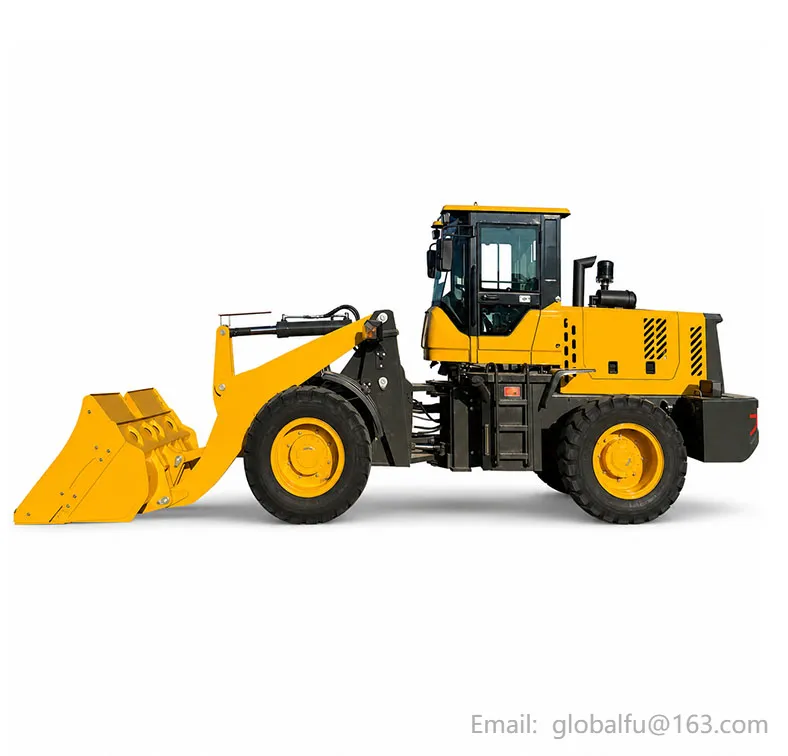
Understanding the components of a wheel loader helps buyers compare different loader models more effectively.
The main components include:
- Engine – provides power for travel and hydraulic operation.
- Hydraulic system – powers the lifting arms and attachment functions.
- Loader arms – raise and lower the bucket.
- Bucket – scoops and carries material.
- Axles – transfer power and support the machine.
- Transmission – controls travel speed and torque.
- Cab – provides the operator with visibility and controls.
- Counterweight – helps balance the machine during lifting.
- Tires – provide mobility and ground contact.
- Attachment connection – allows compatible tools to be installed.
The loader’s hydraulic system is particularly important because lifting performance depends on hydraulic power, cylinder design, and system response.
The bucket is equally important. A larger bucket is not always better. The correct bucket size should match the material density, machine capacity, and loading conditions.
For example, lightweight material can sometimes be handled with a larger bucket, while dense rock or aggregate may require a smaller bucket to remain within the machine’s rated operating limits.
What Attachments Can You Use With a Wheel Loader?
One major reason for the popularity of a wheel loader is its versatility.
A basic bucket handles common loading work, but additional attachments can expand the machine’s role.
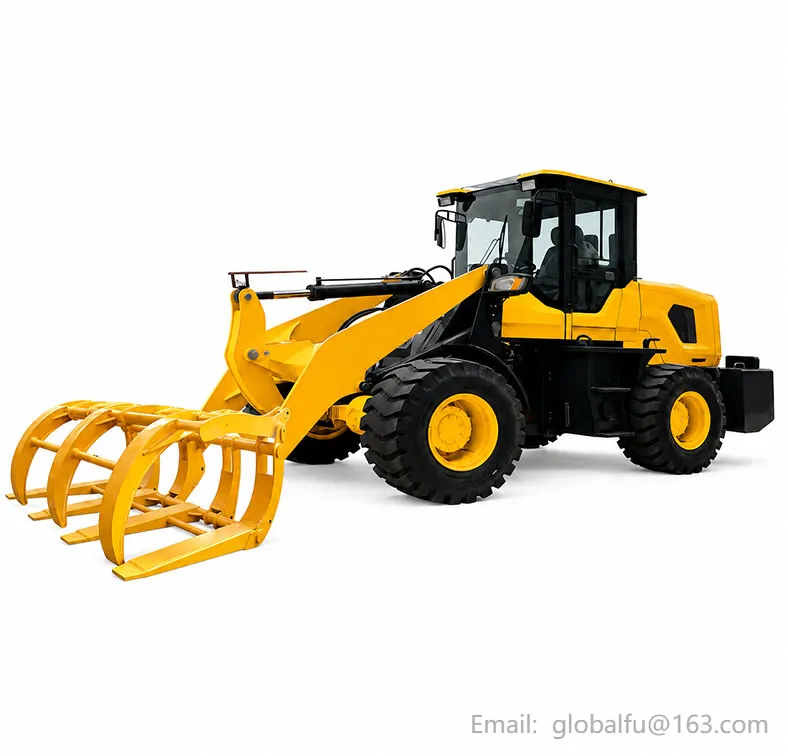
Common wheel loader attachments include:
- General-purpose bucket
- High-capacity bucket
- Fork attachment
- Pallet forks
- Grapple
- Snow blade
- Material handling tools
- Specialized buckets
A wheel loader with forks can handle pallets and packaged materials, making it useful for warehouses, construction yards, and industrial operations.
For landscaping, a compact loader with the correct attachment can move soil, mulch, gravel, and other materials while maintaining good visibility and maneuverability.
The attachment should always be selected according to:
- Material type
- Load weight
- Bucket size
- Hydraulic capacity
- Working height
- Application
A machine with multiple compatible attachments can provide more value than a machine that performs only one task.
Wheel Loader vs. Skid Steer: Which Type of Loader Is Better?
A skid steer and a wheel loader can both move material, but their designs serve different purposes.
A skid steer is highly maneuverable because it turns by varying wheel or track speeds on each side. This makes skid steer loaders useful in tight spaces and for applications requiring frequent directional changes.
A wheel loader, however, generally offers:
- Higher travel speed
- Larger operating capacity
- Better material-handling capability
- Greater bucket capacity in many applications
- Better suitability for longer travel distances
A compact wheel loader can sometimes fill the space between a skid steer and a conventional loader.
Track-based alternatives such as a track loader or compact track loaders provide advantages on soft or uneven terrain, while wheeled equipment is often preferred for hard surfaces and applications involving frequent travel.
The decision should be based on the job site.
If you need compact maneuverability and frequent turning, a skid steer may be appropriate.
If you need to move aggregate over longer distances and load trucks efficiently, a wheel loader may be the better solution.
Wheel Loader vs. Backhoe Loader: What Is the Difference?
A backhoe loader combines a front loading bucket with a rear excavating arm. This makes it useful when one machine needs to perform both digging and loading.
A wheel loader has a different purpose.
Its front-mounted loading system is optimized for:
- Loading
- Carrying
- Stockpiling
- Aggregate handling
- Truck loading
If your project mainly requires material movement, a wheel loader is usually more focused on the task.
If the project requires both excavation and loading, a backhoe loader may provide more functional flexibility.
This is an important distinction when comparing different front loaders and construction machines.
How Do Wheel Loader Attachments Change Productivity?
The correct attachment can change how effectively a loader performs a specific job.
For example:
General-Purpose Bucket
Best for:
- Soil
- Sand
- Gravel
- General construction material
Fork Attachment
Best for:
- Pallets
- Building materials
- Packaged goods
High-Capacity Bucket
Useful for:
- Lightweight materials
- Large-volume loading
- Stockpile operations
The machine’s productivity depends on more than bucket capacity.
A basic production calculation considers:
Material per cycle × cycles per hour = theoretical material movement
Real production is affected by:
- Loading time
- Travel distance
- Dumping time
- Operator skill
- Material density
- Jobsite layout
- Machine maneuverability
A larger machine may carry more material per cycle but lose some efficiency if the work area is too small.
A smaller machine may carry less but complete more cycles because it can move faster around the site.
What Should You Know About Wheel Loader Brands?
The global wheel loader brands market includes many established manufacturers, and buyers may encounter names such as Caterpillar, Volvo, CASE, Komatsu, LiuGong, SDLG, XCMG, and others.
These brands can provide useful benchmarks, but a professional purchasing decision should not be based on brand recognition alone.
Compare:
- Rated operating capacity
- Bucket size
- Engine specification
- Hydraulic performance
- Operating weight
- Fuel efficiency
- Spare-parts availability
- Dealer support
- Purchase price
- Destination-country service capability
For international B2B buyers, parts availability can be particularly important.
A machine with an excellent specification is less useful if essential spare parts take weeks to reach a remote project.
Kaishun therefore approaches equipment selection from a project perspective. The focus is not simply on offering one loader model, but on matching the machine configuration to the customer’s working conditions, destination market, and broader equipment requirements.
What Is the Role of Wheel Loaders in Construction and Industry?
The wheel loader has a broad role in construction because material movement happens at almost every stage of a project.
On a typical construction site, loaders may move:
- Excavated soil
- Aggregate
- Sand
- Gravel
- Concrete-related materials
- Construction debris
In aggregate operations, loaders move material between stockpiles and processing or transport equipment.
In agriculture, they can handle bulk materials and cleanup tasks.
The role in agriculture and industrial operations is particularly important where materials need to be moved repeatedly over relatively hard surfaces.
Landscaping is another application. A compact machine can move soil, mulch, stone, and planting materials while maintaining good visibility around finished areas.
This broad application range explains why the wheel loader market includes machines from very compact models to extremely large mining loaders.
How Does a Wheel Loader Work on Different Ground Conditions?
Ground conditions should influence machine selection.
A wheeled machine performs particularly well on:
- Asphalt
- Concrete
- Compacted yards
- Firm soil
- Established construction roads
The main advantage is efficient travel.
A wheel loader can move quickly between a stockpile and truck-loading area, especially where the travel route is reasonably firm.
However, wet, soft, muddy, or highly uneven ground can change the equation.
A tracked machine may provide better flotation in some conditions.
This is why buyers should assess:
- Soil condition
- Slope
- Ground bearing capacity
- Travel distance
- Seasonal weather
- Required traction
The best loader is the one that remains productive under the actual conditions of the site.
How Do You Choose the Right Wheel Loader for Your Project?
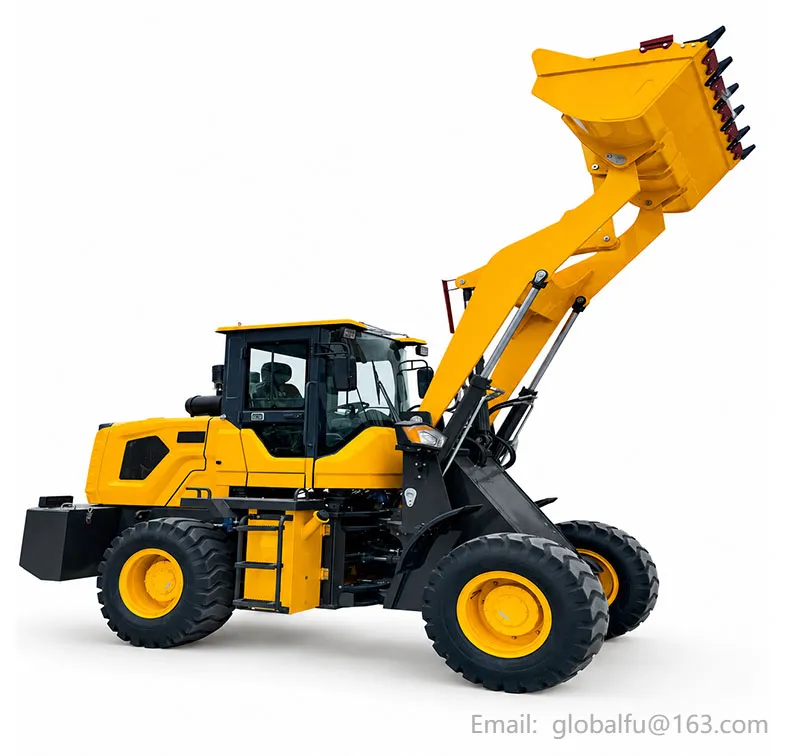
Choosing a wheel loader for your project should start with the material and working cycle.
Ask these questions:
1. What Material Will You Move?
Different materials have different densities.
A bucket suitable for loose soil may not be ideal for heavy rock.
2. How Much Material Must You Move?
Estimate:
- Daily volume
- Hourly production
- Average cycle distance
- Number of working hours
3. What Bucket Size Do You Need?
Bucket size should match material density and machine operating capacity.
Bigger is not automatically better.
4. How Much Lift Capacity Is Required?
Lift capacity matters when loading trucks, handling pallets, or lifting material to a specific height.
5. How Much Space Is Available?
For narrow sites, a compact loader may provide better maneuverability.
6. How Far Will the Machine Travel?
Longer travel distances can favor a wheeled machine because of its mobility and road travel capability.
7. Do You Need Attachments?
If the machine will perform multiple tasks, plan the attachment package before purchase.
Why Choose Kaishun for Wheel Loader Procurement?
Kaishun Machinery is a China-based B2B construction equipment supplier serving international contractors, EPC companies, machinery distributors, importers, rental companies, mining projects, and remote project procurement teams.
Our approach goes beyond supplying an individual wheel loader.
We help international buyers coordinate construction machinery according to the actual project.
Our broader equipment portfolio includes:
This creates a practical advantage for customers purchasing multiple categories.
For example, a remote construction project may require a wheel loader for aggregate handling, a self-loading mixer for concrete production, a telehandler for elevated material handling, and a generator set for temporary power.
Instead of coordinating several unrelated suppliers, a project buyer can discuss the equipment package with one experienced export partner.
Kaishun also supports:
- OEM/ODM customization
- Consolidated shipping
- Spare-parts supply
- Technical communication
- Project-based equipment selection
- After-sales support
For distributors and private-label partners, configuration and branding requirements can be discussed before production.
For EPC contractors, the focus can be placed on matching the equipment package to project specifications and delivery requirements.
What Makes a Good Wheel Loader Supplier for International Buyers?
The best wheel loader supplier is not necessarily the company offering the lowest initial price.
International buyers should examine the complete supply chain.
Important factors include:
- Factory capability
- Product consistency
- Configuration flexibility
- Quality control
- Export experience
- Spare-parts availability
- Documentation
- Shipping coordination
- After-sales communication
A machine may operate for thousands of hours over its service life. A small difference in initial price can become less important if downtime, difficult parts sourcing, or poor technical support affects the project.
For this reason, Kaishun works with customers to understand:
Application → configuration → production → logistics → operation → after-sales support
That complete process is especially valuable for customers in Russia, Australia, the Middle East, Southeast Asia, Africa, and other international construction markets.
What Should Be Included in a Wheel Loader Inquiry?
If you are looking for a wheel loader for sale, sending detailed requirements helps the supplier recommend a more suitable machine.
Include:
- Application
- Material type
- Required bucket capacity
- Required lift capacity
- Operating environment
- Working hours per day
- Required quantity
- Destination country
- Preferred engine or configuration
- Attachment requirements
You can also provide photographs or a short description of the worksite.
For example:
“We need a medium-sized wheel loader for loading aggregate into 20-ton trucks at a quarry. The machine will operate approximately eight hours per day.”
This is much more useful than simply asking:
“Please send your wheel loader price.”
A good inquiry gives the manufacturer enough information to recommend a practical configuration.
FAQ
What is a wheel loader used for?
A wheel loader is primarily used to scoop, lift, carry, stockpile, and load materials. Common applications include construction, quarrying, mining, agriculture, landscaping, industrial cleanup, and general material handling.
What is the difference between a wheel loader and a front end loader?
In many markets, front end loader and wheel loader are used to describe similar equipment. A wheel loader is a wheeled loading machine with a front-mounted bucket, while the exact terminology can vary by region and manufacturer.
What size wheel loader should I choose?
The correct size depends on material density, required bucket size, lift capacity, working area, travel distance, and production target. Compact and small loaders suit restricted areas, while medium and large wheel loaders are better for higher-volume operations.
Are compact wheel loaders good for construction?
Yes. A compact wheel loader can be useful for construction, landscaping, municipal work, and material handling where maneuverability and a smaller footprint are important.
Can a wheel loader use forks?
Yes, when the machine is configured with a suitable fork attachment and the rated capacity supports the intended load. A wheel loader with forks can handle pallets and other packaged materials in appropriate applications.
Should I buy or rent a wheel loader?
Renting can be suitable for short-term projects, while purchasing may be more economical when the machine will be used regularly over several years. Compare utilization, rental rates, ownership costs, maintenance, and expected project demand before deciding.
Does Kaishun supply wheel loaders for international projects?
Yes. Kaishun Machinery supplies wheel loaders and other construction machinery to international B2B customers. The company can also coordinate additional equipment, spare parts, customization, consolidated shipping, and after-sales support according to project requirements.
Final Thoughts: Choose the Wheel Loader Around the Work
A wheel loader is a highly versatile machine, but the best machine is not always the biggest one.
A compact wheel loader can provide excellent maneuverability in restricted spaces.
A small loader can support light construction and landscaping work.
A medium wheel loader can provide a strong balance between capacity and mobility.
A large wheel loader can deliver high production in quarrying, mining, and major infrastructure projects.
The right wheel loader should match:
- Material
- Bucket size
- Lift capacity
- Ground conditions
- Working space
- Travel distance
- Production target
- Attachments
- Service requirements
For international contractors, EPC companies, distributors, and project procurement teams, the supplier matters just as much as the machine.
Kaishun Machinery provides a broad range of construction machinery and integrated procurement support for global engineering projects. From wheel loaders and material-handling equipment to self-loading concrete mixers, aerial work platforms, generator sets, trailers, and prefab houses, our team can help you build an equipment package around your actual project requirements.
Tell Kaishun your material type, required capacity, application, destination country, quantity, and preferred configuration. Our engineering team can recommend a suitable wheel loader and provide a project-based quotation.











 September 11, 2026