Kaishun Engineering Team | Construction Equipment Content Team | Published September 2026
Aerial platform, MEWP, AWP, and cherry picker frequently describe the same category of powered lifting equipment. The differences come from region, document type, and how formal the audience expects the language to be — not from four separate machine types.
Why One Machine Ends Up With Four Names
A tender document written in the UK will use MEWP because that’s the term EN 280 defines. A US spec sheet will say AWP. A site supervisor on a call will say cherry picker regardless of which country wrote the paperwork. None of these speakers is wrong — they’re drawing from different documents that were never cross-referenced against each other.
This matters in procurement. A buyer searching a supplier’s catalog for “MEWP” and finding nothing, when the same supplier lists “aerial work platforms” on the next page, may conclude the product doesn’t exist. It exists. The catalog just used a different label.
Mapping the Terms
| Term |
Where it’s standard |
What it refers to |
| Aerial platform |
General/international catalogs, marketing copy |
Broad umbrella term for any powered platform that lifts a person to height |
| MEWP (Mobile Elevating Work Platform) |
UK, EU, regulatory and standards documents |
The formal term used in EN 280, the European standard governing design and safety of this equipment |
| AWP (Aerial Work Platform) |
North America, commercial spec sheets |
Functionally interchangeable with MEWP; more common in US-market documentation |
| Cherry picker |
Informal use, purchase orders, jobsite conversation |
Originated with boom-type units, now used loosely for almost any lifting platform |
EN 280 is the reference point for MEWP as a defined term, covering design, calculation, stability, and safety requirements for this equipment class. When a spec sheet or tender cites MEWP compliance, EN 280 is what’s being invoked, not a separate certification body.
Telescopic vs. Articulating: The Distinction That Actually Changes the Spec
Within this category, two boom types get conflated more often than the four naming variants do.
A telescopic boom extends in a straight line, section sliding out of section, and reaches its maximum height and horizontal outreach along that same line. An articulating boom has jointed sections that bend, letting the platform go up and over an obstacle — a wall, a roofline, existing equipment — rather than only outward.
The practical difference shows up in outreach and obstacle clearance, not in working height alone. Two machines rated for similar maximum height can have very different usable reach depending on which boom type they carry. This is the number a buyer should check before working height, because working height without obstacle clearance data doesn’t tell you whether the platform can actually get to the point that needs work.
Where Truck-Mounted Units Fit In
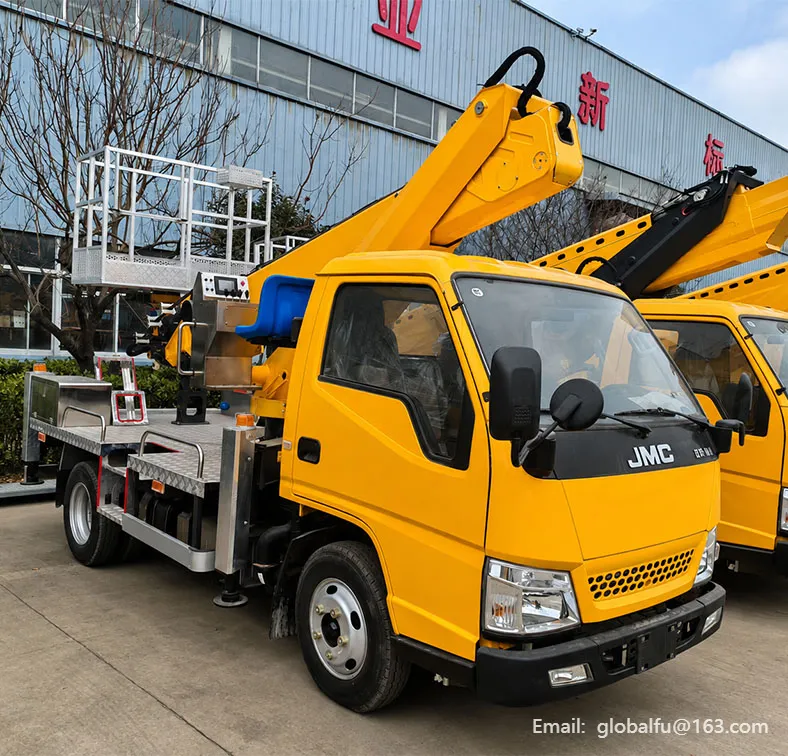
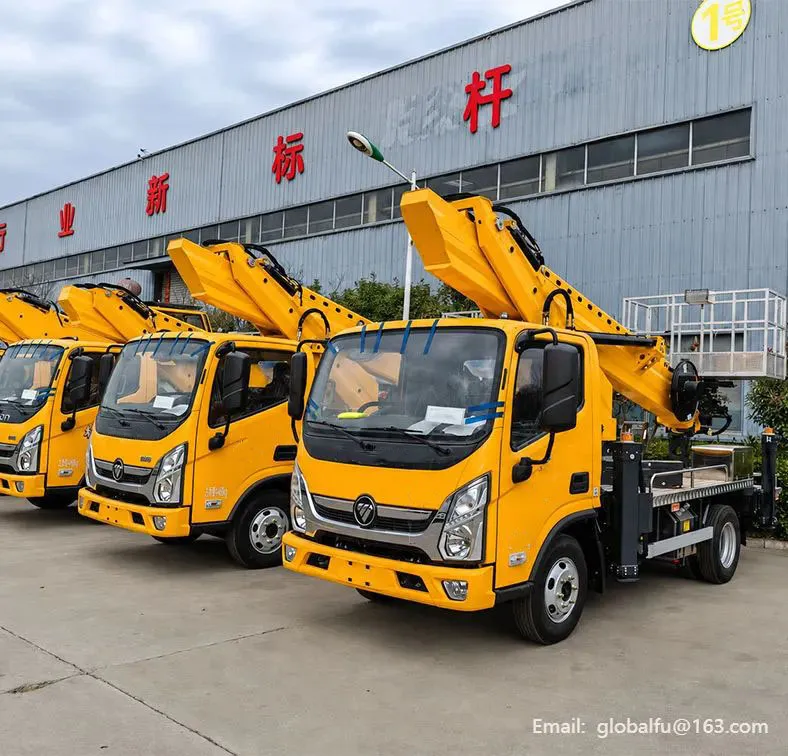
Not every machine in this category is self-propelled. Kaishun’s aerial access line is built as truck-mounted platform trucks rather than self-propelled boom lifts — the chassis does the driving between locations, and the boom does the lifting once positioned. Kaishun does not currently manufacture self-propelled boom lifts; buyers specifically requiring that configuration should factor this into supplier selection.
The current range covers two working heights, 28 m and 30.5 m, with a platform rated load of 200 kg. Operation runs through CAN bus control with both remote and manual modes, and the platform holds 360° continuous rotation rather than a limited swing arc. Hydrostatic auto-leveling adjusts the platform as the truck sits on uneven ground, an emergency pump provides a manual-descent backup if hydraulic power is lost, and outrigger interlock prevents boom operation until the outriggers are correctly deployed.
Compared with generic glossary entries that define one term at a time, this specification set shows what the “aerial platform” label maps to on an actual truck-mounted unit — useful for a tender writer trying to match terminology across an RFQ that mixes MEWP language with a supplier catalog using AWP.
The Mix-Up Worth Flagging: Scissor Lift vs. Cherry Picker
Because “cherry picker” gets applied loosely, buyers sometimes use it for scissor lifts too. The two aren’t interchangeable in a spec. A scissor lift platform moves straight up on a crossed-brace mechanism, with no boom and no horizontal outreach beyond the platform’s own footprint. A boom-type unit — the machine “cherry picker” originally described — reaches outward as well as up. If a tender specifies “cherry picker” without a working height or outreach figure, it’s worth confirming with the requester whether they actually need boom reach or just vertical lift, since the two draw from different product families and different quotes.
FAQ
Q: Is MEWP just the British term for what Americans call AWP?
A: Functionally, yes — both describe the same equipment category. MEWP is the term used in EN 280 and appears more often in UK/EU documentation; AWP is the more common label in North American spec sheets and catalogs.
Q: Does “aerial platform” always mean self-propelled equipment?
A: No. The term covers both self-propelled units and truck-mounted platform trucks. The distinction matters for site access and transport between locations, so it’s worth confirming which configuration a supplier actually builds before assuming compatibility with a project’s needs.
Q: What does EN 280 actually certify?
A: EN 280 is the European standard covering design, calculations, stability, and safety requirements for mobile elevating work platforms. Compliance with it is what’s typically meant when a spec references “MEWP-compliant” equipment for EU markets.
Q: Why does outreach matter more than working height for some jobs?
A: Working height tells you how high the platform goes; outreach tells you how far it can extend horizontally to actually reach the work point around an obstacle. A machine with impressive height but limited outreach may still be unable to reach a wall-mounted fixture set back from the truck’s parking position.
Q: Can I get pricing for a specific working height configuration?
A: Kaishun doesn’t publish price lists for aerial platform trucks; configuration (working height, control mode, outrigger setup) affects cost enough that pricing is handled through a direct quote request rather than a published range.
Next: for outrigger deployment procedure and interlock verification on sloped ground, see the aerial platform truck setup guide. For full working-height and load specifications by model, see the aerial platform truck spec page.











 September 14, 2026