Kaishun Engineering Team | Construction Machinery Content Team | Published September 2026
This guide covers truck-mounted aerial platforms with outrigger-based setup, not self-propelled rough-terrain boom lifts. If a slope needs a self-propelled machine that levels on the move, that’s a different product category — the outrigger sequence below applies specifically to outrigger-supported units.
Why This Procedure Matters More on a Slope Than Level Ground
On flat, compacted ground, outrigger deployment is close to a formality — pads go down, the machine levels quickly, and the interlock confirms almost immediately. A slope changes every step in that sequence. Ground bearing capacity becomes uneven across the four outrigger positions. Pad loading isn’t symmetric. The hydrostatic levelling system has more work to do, and the interlock exists specifically to catch the case where that levelling hasn’t actually completed before someone starts boom movement.
None of this is exotic engineering knowledge. It’s a sequence, done in order, verified at each step rather than assumed. Skipping a verification step doesn’t usually cause a failure on the first lift — it causes one on the lift where ground conditions happen to be worse than the operator estimated.
Step 1: Assess the Ground Before Any Outrigger Touches It
Walk the full footprint the outriggers will occupy, not just the spot where the truck will park. Look for soft or disturbed soil, recent excavation backfill, buried utility trenches, and any visible slope grade across the outrigger positions rather than just along the truck’s length. A slope that looks minor from the cab can be meaningfully different from one outrigger corner to the diagonal opposite corner — check all four positions individually, not the ground average.
Confirm there’s no drop-off, void, or soft shoulder within the outrigger’s loaded footprint, including underneath where a pad will sit. An outrigger pad transfers substantial point load into the ground beneath it, and ground that supports foot traffic without issue can still be inadequate for that concentrated load.
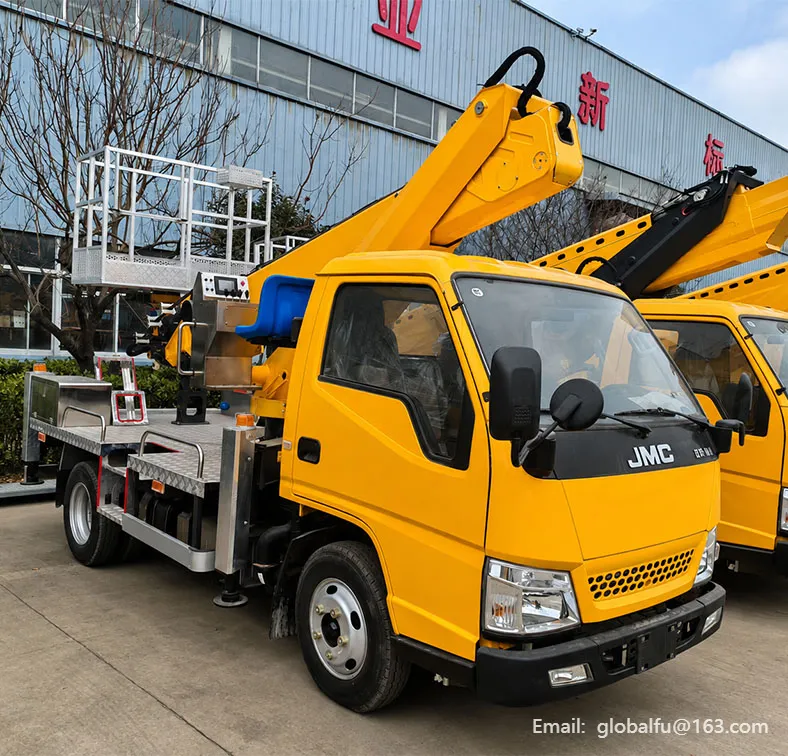
Step 2: Position the Truck and Begin Outrigger Deployment
Position the truck so the outrigger spread reaches the most level, best-bearing ground available within the working radius needed for the job — not simply the closest parking spot to the work area. Deploy outriggers in the sequence specified for the unit, extending each to full reach before engaging ground contact, rather than partially extending all four and adjusting afterward.
Use outrigger pads sized for the ground condition identified in Step 1. Soft or uneven ground calls for larger pads than compacted, well-bearing ground, since pad size is what controls how the outrigger’s point load gets distributed rather than concentrated.
Step 3: Load the Pads and Check for Full, Even Contact
Bring each outrigger down until full ground contact is achieved under load — not just pad-to-ground touch, but the point where the outrigger is actually bearing weight. On sloped or uneven ground, this often means the four outriggers extend to noticeably different lengths before each achieves full loaded contact, which is expected rather than a sign something is wrong.
Check that no outrigger shows continued settling after initial contact. Ground that keeps compressing under load after the outrigger appears seated is ground that hasn’t finished settling — a condition worth re-checking before proceeding rather than assuming it will stabilize on its own during the lift.
Step 4: Let Hydrostatic Auto-Levelling Complete Fully
Once all four outriggers are loaded, the hydrostatic auto-levelling system brings the platform base to level automatically. On a slope, this process typically takes longer and involves more active adjustment across the outrigger legs than it does on flat ground, since the system is compensating for a larger initial deviation from level.
Wait for the levelling system to indicate completion rather than judging level by eye from the cab or platform. A platform base that looks approximately level to the operator can still be outside the tolerance the system is actually working to, and the interlock in the next step is what confirms that gap rather than the operator’s visual estimate.
Step 5: Confirm Interlock Engagement Before Any Boom Movement
This is the step the whole sequence exists to protect. The outrigger interlock is designed to prevent boom movement until the control system confirms outriggers are correctly deployed, loaded, and the platform is within level tolerance — it isn’t a formality to click past, it’s the system’s actual gate against operating from an unconfirmed base.
- Confirm the interlock status indicator shows engaged, not just that levelling has stopped moving.
- If the interlock has not engaged, do not attempt to override it or move the boom regardless of how level the platform appears — return to Step 3 and re-check outrigger contact and pad seating first.
- Re-verify interlock status again after any adjustment made in response to a failed engagement, since correcting one outrigger’s contact can shift load distribution across the other three.
An interlock that won’t engage after a correctly executed setup sequence is telling the operator something about ground conditions, not something about the machine — that’s the signal to reassess the site, not to look for a way around the system.
Step 6: Check the Emergency Pump Before Starting Work
With the interlock confirmed and before beginning platform work, verify the emergency pump is functional and accessible. On a slope setup specifically, this check matters more than it does on flat ground, because a slope is exactly the condition under which an emergency descent — if the primary hydraulic system loses power mid-lift — needs to work correctly on the first attempt, not be discovered as non-functional at the moment it’s needed.
Where Truck-Mounted Setup Costs More Time Than It’s Worth
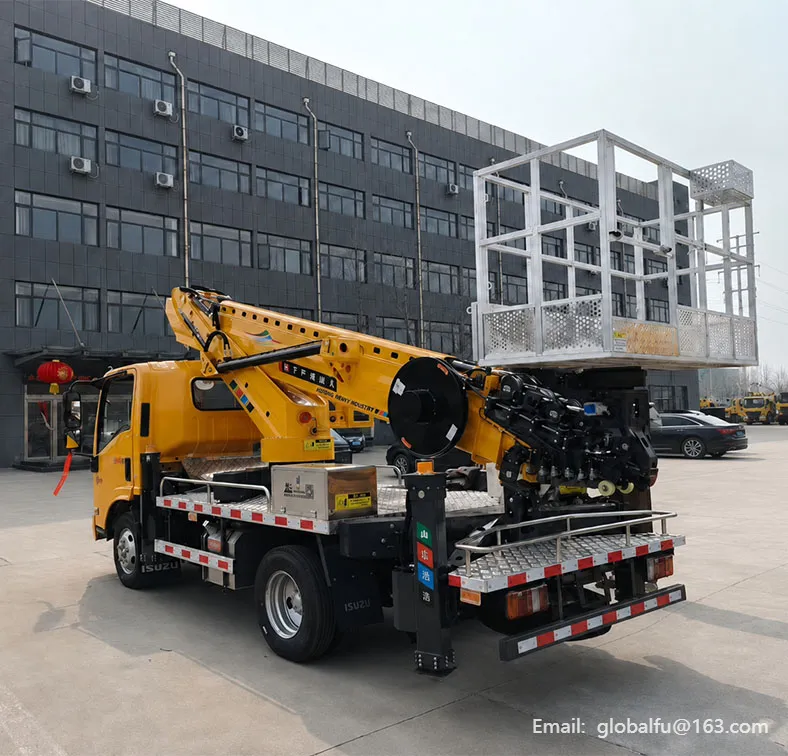
An outrigger-based truck-mounted platform needs bearing ground for the outrigger footprint and the setup time this whole sequence describes — typically longer on a slope than the equivalent time on level ground, and longer still on marginal ground that requires re-checking pad seating partway through. A self-propelled rough-terrain machine that levels on the move doesn’t carry this setup sequence at all; it trades outrigger reach and working height capability for faster repositioning across a site with variable terrain.
That’s a real operational tradeoff, not a minor one. A job with one setup position and a full day’s work at height favors the outrigger-based unit’s stability and reach. A job requiring frequent repositioning across uneven ground within a shift favors a self-propelled machine’s setup speed instead — and choosing the wrong category for the job pattern costs more time over a shift than either machine’s individual setup time.
Standards This Procedure Is Built Around
EN 280 covers mobile elevating work platforms and is the relevant standard framework for outrigger deployment, levelling tolerance, and interlock function on this equipment category. Where the platform includes an enclosed operator cab, ISO 3471 (rollover protective structures) and ISO 3449 (falling-object protective structures) apply to cab protection specifically, separate from the outrigger and levelling procedure itself.
FAQ
Does this setup procedure apply to a self-propelled boom lift?
No — this sequence is specific to outrigger-based, truck-mounted aerial platforms. A self-propelled rough-terrain boom lift uses a different levelling approach and doesn’t go through outrigger deployment and pad loading in the same way.
What’s the maximum slope an outrigger-based platform can be set up on?
That figure depends on the specific unit’s engineering limits and the ground condition at the setup location — it isn’t a single number that applies across all outrigger-based platforms, and operators should confirm the applicable limit for their specific machine rather than estimate it.
What does it mean if the interlock won’t engage after outriggers appear to be seated?
It typically means ground contact, pad loading, or level tolerance hasn’t actually been achieved even though it may look correct visually — the response is to re-check Steps 3 and 4, not to override the interlock.
Why check the emergency pump specifically before slope work, rather than as routine maintenance only?
A slope setup is exactly the condition where an emergency descent capability is most likely to be needed if the primary hydraulic system loses power mid-lift, so confirming it works before starting is a pre-work check here, not just a scheduled maintenance item.











 September 04, 2026