Kaishun Engineering Team | Construction Machinery Content Team | Published September 2026
Choosing between a diesel and an electric-driven mixer setup starts with a power-availability question, not an engine preference. Grid reliability on site, fuel logistics for a diesel unit, and emissions rules at the port of import usually decide the outcome before horsepower or run cost ever enter the conversation.
What Actually Decides This, Before the Engine Does
A mains-connected electric mixer only works where mains power is dependable enough to run continuously through a pour. That’s rarely a given on infrastructure or resource-sector sites, where grid connections are either absent, shared with other equipment draw, or subject to scheduled outages. A diesel-driven mixer removes that dependency entirely — it carries its own power source and runs wherever it’s parked. The tradeoff isn’t diesel versus electric as a technology preference; it’s site independence versus infrastructure dependency, and the second variable usually settles the first.
Contractors who default to electric because it looks like the lower-emissions, lower-noise choice on paper sometimes discover mid-project that the site’s power draw can’t support continuous mixer operation alongside cranes, pumps, and lighting towers. At that point the “electric” setup becomes a diesel generator feeding an electric mixer anyway — with an extra conversion step and extra points of failure built in.
Grid Reliability on Remote and Developing-Market Sites
Sites in Southeast Asia, parts of Africa, and inland Australia commonly fall into one of three power situations: no grid connection at the site boundary, a connection with documented outage frequency, or a connection sized for lighting and small tools but not for continuous mixing loads. In any of those three, a self-loading diesel mixer sidesteps the question rather than solving it — there’s no power draw to manage because the machine isn’t drawing from site power at all.
Where a generator set is already on site to run other equipment, pairing it with a diesel mixer keeps the fuel and maintenance logistics under one system instead of two separate power chains (grid plus backup generator). That pairing also keeps service and parts support under one supplier relationship; Kaishun’s 150+ global service agencies and 10+ overseas spare parts centers cover both product lines under the same warranty terms, which matters more on a remote site than it does close to a dealer network.
Fuel Logistics Versus Mains Dependency
Diesel isn’t free of its own logistics burden. Fuel has to be sourced, transported, and stored securely on site, and theft or contamination risk exists wherever diesel is stockpiled. On a site with reliable road access and a fuel supplier within reasonable distance, that’s a manageable, routine cost of doing business. On a site reachable only by seasonal roads or barge, fuel resupply timing can become the actual constraint on production schedule — more so than the mixer’s rated output.
Electric setups shift that logistics burden to the utility instead of the contractor, provided the connection holds. Neither option removes logistics; each one just relocates where the logistics risk sits.
Edge Case That Overrides Everything Else
Here’s the case that price and preference don’t decide. Non-road diesel engines imported into the EU are governed by Stage V emissions requirements, and into the US by EPA Tier 4 Final — not by the “Euro V” standard that some equipment marketing still references, which is an on-road vehicle emissions tier and doesn’t apply to construction machinery. A diesel engine that doesn’t meet the applicable non-road tier for the destination market can be blocked at customs regardless of price, spec fit, or contractor preference. This is an eliminator, not a tradeoff to weigh against cost.
Before ordering a diesel-driven mixer for import, confirm the destination market’s applicable non-road emissions tier and verify the specific engine model is certified against it. This step belongs earlier in procurement than freight quoting, because a compliance failure discovered at customs is far more expensive than one caught during spec selection.
Diesel-Plus-Generator Versus Mains-Dependent Electric: A Side-by-Side View
| Dimension |
Diesel Mixer + Generator Pairing |
Mains-Dependent Electric Mixer |
| Power source dependency |
Self-contained; no site connection required |
Requires continuous, adequately sized grid connection |
| Setup on remote sites |
Operational from day one |
Delayed until grid connection is confirmed and sized |
| Fuel/energy logistics |
Diesel resupply and secure storage required |
Dependent on utility reliability; no fuel handling |
| Emissions compliance path |
Governed by Stage V / Tier 4 Final at import |
No engine-level emissions certification required |
| Combined power infrastructure |
One fuel and maintenance system covers mixer + genset |
Separate systems if backup generator is later added |
| Noise and exhaust on site |
Present; genset and mixer engine both run |
Minimal at point of use |
Neither column wins outright. A site with confirmed, stable grid capacity and no import emissions barrier can run the electric setup without ever touching the diesel-side tradeoffs above. The deciding factor is which column’s constraints the actual site already has to deal with — not which one looks cleaner in a brochure comparison.
Engine Selection at the Small End: The 0.32 CBM Reference
At the smaller end of the self-loading diesel mixer range, the 0.32 CBM unit is built around the RATO R740-1 diesel engine, paired with 4×4 drive and a 270°/290° drum rotation depending on model configuration. That size class is typically specified for smaller pours, tight urban or renovation sites, or as a secondary unit alongside a larger mixer rather than as the primary production machine on a large infrastructure job — where the 1.8, 2.0, 3.5, or 4.0 CBM units in the same line carry more of the daily output load.
Fuel consumption figures for the RATO R740-1 in mixer duty aren’t published in Kaishun’s current specification set, so a contractor sizing a fuel resupply schedule around this engine should request that figure directly during quoting rather than estimate it from general diesel engine tables — engine load in mixer duty cycles doesn’t map cleanly onto generic fuel-burn charts.
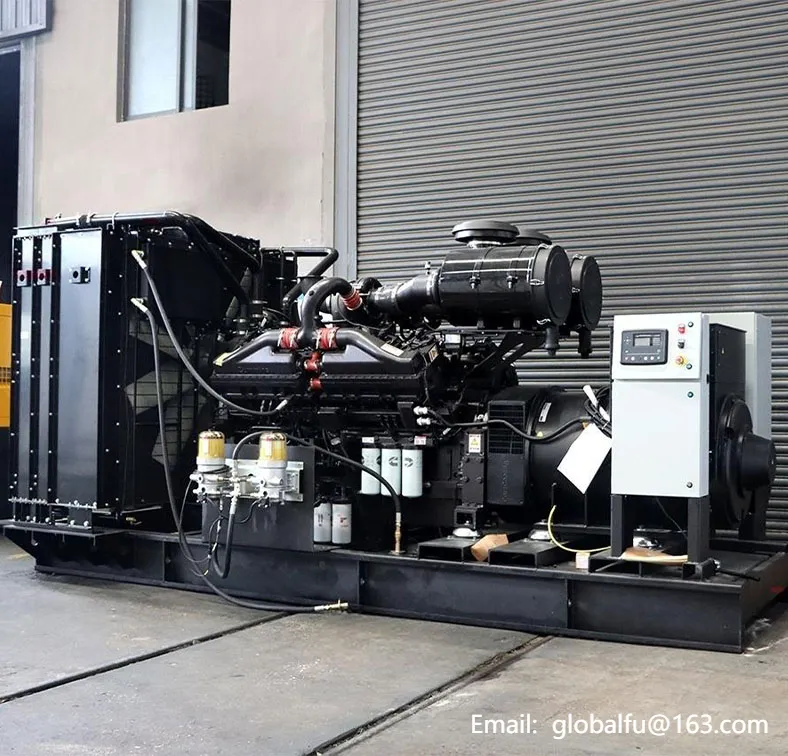
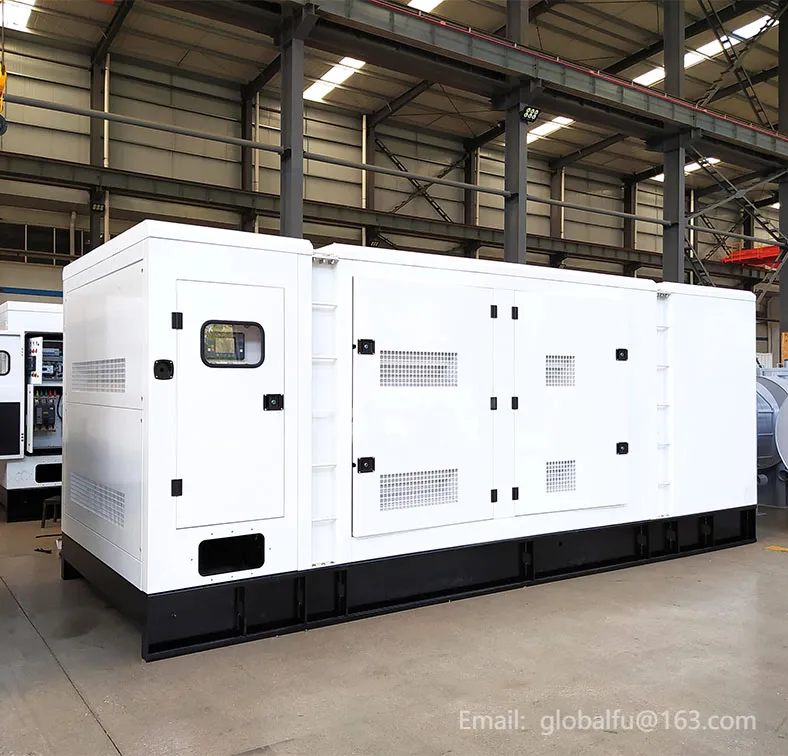
On the paired-power side, Kaishun’s diesel generator sets range from 8 kW up to 3,000 kW prime power depending on engine brand (Perkins, Cummins, Weichai, or Yuchai), which covers everything from a single small mixer’s auxiliary needs up to running a full site’s mixed equipment load. Gas gensets (natural gas or biogas) are also available from 60 to 1,500 kW where that fuel path fits the site better than diesel.
A Working Checklist Before Committing to Either Setup
- Confirm whether the site has a grid connection, and if so, get the actual available capacity in writing — not an assumption based on nearby infrastructure.
- If diesel is the likely path, identify the destination country’s applicable non-road emissions tier (Stage V, Tier 4 Final, or another regional standard) before finalizing engine selection.
- Map fuel resupply distance and frequency against the project’s production schedule, not just against total project duration.
- If a generator set will be needed regardless — as backup or as primary power — evaluate whether pairing it with a diesel mixer under one supplier and warranty relationship simplifies logistics versus sourcing separately.
- Get a written quote covering both setups where the site genuinely could support either; pricing for Kaishun mixers and generator sets isn’t published, so this step requires a direct inquiry rather than a catalog lookup.
Where This Doesn’t Have a Universal Answer
A site with confirmed grid stability, no import emissions restriction, and no other diesel-dependent equipment on site has little practical reason to introduce a diesel mixer. Conversely, a remote site with intermittent or absent grid power has little practical reason to plan around mains dependency, regardless of any emissions or noise preference. The honest answer to “diesel or electric” is that most job sites already have a de facto answer sitting in their power infrastructure and import documentation — the planning work is confirming what that answer actually is before equipment is ordered, not choosing a preference and hoping the site accommodates it.
FAQ
Does a diesel mixer need a separate generator, or does it power itself?
A self-loading diesel mixer runs on its own onboard diesel engine and doesn’t require a separate generator to operate the mixing function; a generator set only enters the picture if other electric equipment on the same site needs power.
Is “Euro V” the correct emissions standard for a diesel concrete mixer engine?
No — Euro V is an on-road vehicle emissions standard. Non-road machinery, including concrete mixer engines, is governed by EU Stage V or US EPA Tier 4 Final depending on the destination market.
Can an electric mixer run from a generator instead of mains power?
Yes, but at that point the setup carries the fuel and maintenance logistics of a diesel system anyway, plus the added complexity of the generator-to-electric conversion step — which is why many contractors on generator-dependent sites choose a diesel-driven mixer directly instead.
Where can I get a price for either setup?
Kaishun does not publish pricing for mixers or generator sets; both are quoted directly based on configuration, engine brand, and destination market, so pricing requires a direct inquiry rather than a listed range.











 September 01, 2026