Kaishun Engineering Team | Construction Equipment Content Team | Published September 16, 2026
Sizing a diesel generator set means matching prime power output, voltage/frequency, engine brand, and enclosure type to your actual load and site conditions — not picking the biggest number on a spec sheet. Get any one of those four wrong and you either overpay upfront or undersupply power when it matters.
Start With Load Calculation, Not kW Wishlists
Most buyers approach a generator set purchase backwards. They ask “what’s the biggest unit in my budget” before they’ve calculated what their site actually draws. A concrete batching plant, a construction camp, and a telecom tower have wildly different load profiles even at similar peak kW — the batching plant pulls a hard inrush current when the mixer motor starts, the camp draws steadily across HVAC and lighting, the tower barely moves.
Total your running load first, then add starting/inrush current for the single largest motor on the circuit — this is usually the number that actually decides your generator set size, not the sum of nameplate wattages. If you skip this step, you’ll either buy a unit too small to start your biggest motor or one so oversized it runs under low load most of the time, which shortens engine life and wastes fuel.
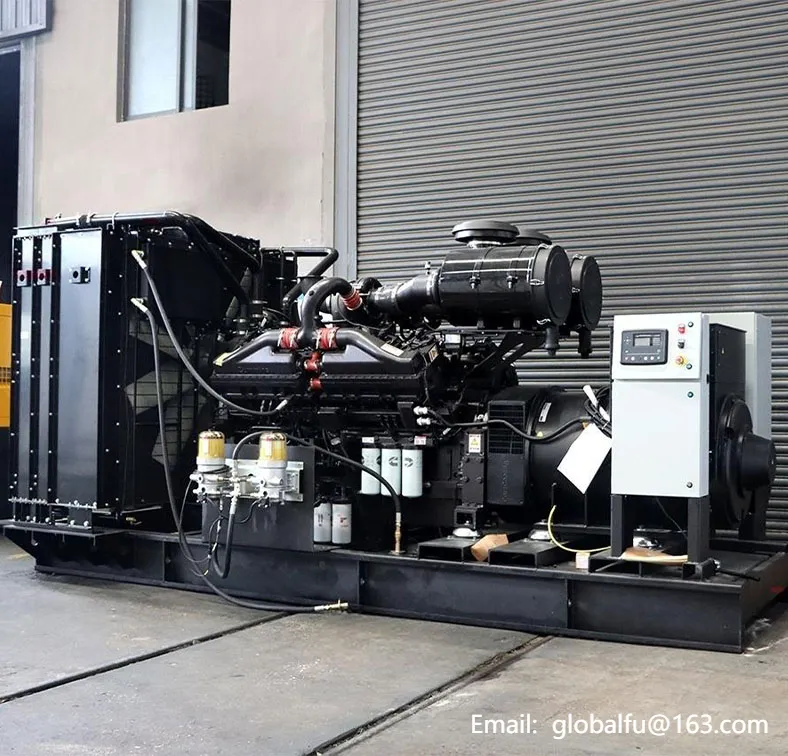
Prime Power Range: 8 kW to 3,000 kW, by Engine Brand
Diesel generator sets span 8–3,000 kW prime power, but no single engine brand covers the full range — a fact worth knowing before you request a quote:
| Engine Brand |
Prime Power Range |
| Perkins |
8–1,800 kW |
| Cummins |
20–3,000 kW |
| Weichai |
20–3,000 kW |
| Yuchai |
30–3,000 kW |
Below 20 kW, Perkins is typically the only option among these four; above 1,800 kW, Cummins, Weichai, or Yuchai take over. If your load calculation lands you near a brand’s ceiling or floor, that alone can narrow your shortlist before you get into alternator preference or fuel consumption comparisons.
Alternator brand is a separate decision from engine brand — Stamford, Marathon, and Leroy-Somer are the common options paired with these engines, and the combination affects lead time and spare-parts availability in your region more than it affects raw output.
Voltage and Frequency: 50Hz/400V vs 60Hz/480V
This is the first filter, not the last. 50Hz/400V and 60Hz/480V configurations aren’t interchangeable after manufacturing — the alternator winding is built for one or the other. Confirm your destination country’s grid standard before anything else in the spec conversation, because switching frequency after production means rebuilding the unit, not adjusting a setting.
Most of Africa, the Middle East, Southeast Asia, and Russia run 50Hz. North America and parts of the Americas run 60Hz. If you’re supplying a project across two regions with different standards, you need two separate spec sheets, not one unit configured to “handle both.”
Four Enclosure Types and When Each One Fits
Enclosure choice is a site-conditions decision more than a budget decision:
- Open type — no acoustic housing, lowest cost, suited to sites where the generator sits in a dedicated plant room or the noise isn’t a constraint.
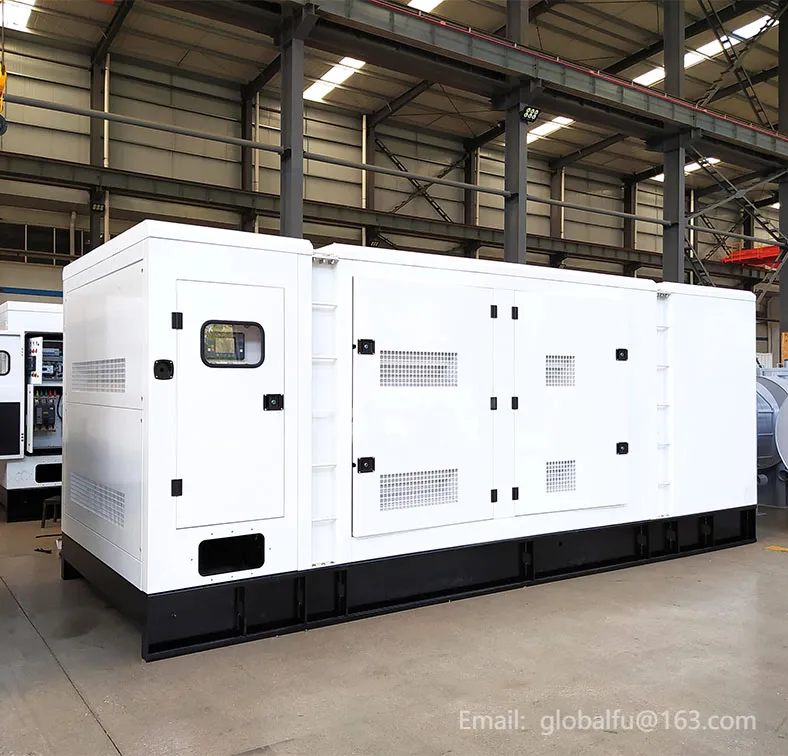
- Silent (canopy) type — acoustic enclosure reduces noise for sites near residential areas, hospitals, or offices where uncontrolled genset noise would draw complaints.
- Trailer-mounted type — built onto a towable chassis, suited to standby power that needs to move between job sites rather than stay fixed.
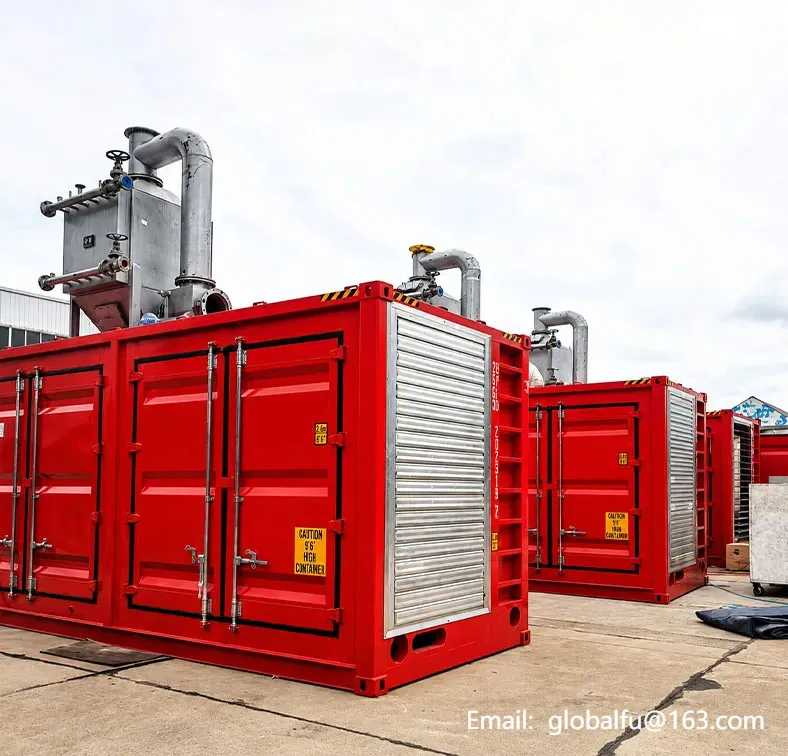
- Containerized type — full weatherproof housing, suited to remote sites, coastal/high-humidity environments, or projects that need the unit stacked or shipped as a standard container unit.
A silent canopy on a remote mining site is money spent solving a problem you don’t have; an open-type unit fifty meters from a site office in a residential zone is a problem you’ll hear about within a week.
Diesel or Gas? Weighing the Alternative
Gas generator sets — natural gas or biogas — cover 60–1,500 kW, a narrower band than diesel’s 8–3,000 kW range. They make sense where pipeline gas or biogas is already available on-site and fuel logistics for diesel would be the harder problem, such as a landfill site generating its own biogas or a facility already on a gas grid. For most construction and remote-site applications where diesel delivery is straightforward and fuel needs to be stored on-site regardless, diesel remains the simpler procurement path.
The Oversizing Mistake Most First-Time Buyers Make
The most common error isn’t undersizing — it’s oversizing “to be safe.” A generator set running consistently under 30% load doesn’t just waste fuel; wet-stacking (unburned fuel and carbon building up in the exhaust system from prolonged low-load operation) becomes a real maintenance issue over time. If your actual running load is 150 kW, a 500 kW unit bought for headroom will cost you more in service visits over three years than a correctly sized 200 kW unit would have cost in fuel efficiency.
The fix isn’t to size exactly to your calculated load either — build in headroom for future load growth, typically 20–25%, but base that percentage on a documented load calculation, not a round number that felt safe in a sales conversation.
Certification and Standards to Check Before You Sign
Ask any supplier which standards their gensets are built and tested to, and expect a specific answer, not a general assurance. ISO 8528 is the governing standard series for generating sets driven by reciprocating internal combustion engines — it covers everything from performance classes to instrumentation and documentation requirements, and it’s the reference point a supplier should be able to point to directly rather than gesture at. ISO 9001 quality management certification and CE marking are the other two baseline checks worth confirming in writing.
Sourcing From One Factory Versus Multiple Vendors
Compared to assembling a genset order across separate engine, alternator, and enclosure vendors — which is how many buyers still source, chasing individually cheaper components — a direct-factory order consolidates the engine, alternator, control panel, and enclosure into one spec sheet, one warranty, and one shipment. That doesn’t automatically make it cheaper on a line-item basis, but it removes the coordination cost of three separate lead times and three separate warranty claims processes if something fails in year one. Kaishun builds gensets this way, alongside eight other equipment categories, backed by a global network across 50+ countries for parts and service follow-up.
Six Steps to Narrow Down Your Spec Sheet
- Calculate total running load and largest single motor’s inrush current for your site.
- Confirm destination grid standard — 50Hz/400V or 60Hz/480V — before requesting quotes.
- Match your kW figure to an engine brand’s published range (see the table above).
- Choose enclosure type based on noise sensitivity, mobility needs, and climate exposure.
- Decide diesel versus gas based on fuel availability at the actual site, not general preference.
- Request certification documentation (ISO 8528, ISO 9001, CE) in writing before final order confirmation.
What About Pricing?
Generator set pricing depends on kW rating, engine brand, alternator choice, enclosure type, and any cold-weather or custom-branding options — enough variables that a published price list wouldn’t be accurate for most real orders. The practical path is a quote request built from your load calculation and the choices above, which gets you a figure based on your actual configuration rather than a generic listed range.
FAQ
Q: What’s the difference between prime power and standby power ratings?
A: Prime power is the rating for continuous, variable-load operation with no fixed hour limit — the correct rating to size against for ongoing site power. Standby power ratings apply to backup-only use with strict annual hour caps and shouldn’t be used as your baseline for continuous or primary power applications.
Q: Can one generator set be reconfigured between 50Hz and 60Hz later?
A: No. Frequency is set by the alternator’s winding configuration at build time. Changing it after manufacturing isn’t a field adjustment — it requires a different unit.
Q: Is a containerized enclosure the same as a silent/canopy enclosure?
A: No. Containerized units are built for full weatherproofing and often stacking or shipping as standard container dimensions; silent/canopy units are primarily built to reduce noise output and don’t carry the same environmental sealing.
Q: How long is the warranty on a generator set?
A: Kaishun‘s standard coverage is 1 year or 2,000 hours, whichever comes first, with lifetime online technical support and original spare parts supply after that period.
Q: Do gas generator sets need different fuel logistics planning than diesel?
A: Yes. Gas gensets depend on either pipeline gas or an on-site biogas source, which needs to be confirmed as reliably available before committing — diesel’s advantage is that fuel can be stored and delivered independently of any fixed infrastructure.











 September 16, 2026