Buying the wrong concrete mixer can slow a job, waste labor, and raise your cost per batch. A small mixer may not keep up, while an oversized machine adds cost you do not need. The solution is simple: match the mixer to your material, output, site, and project scale.
A concrete mixer machine blends cement, aggregate, water, and other mix ingredients into fresh concrete. The right mixer depends on batch size, mobility, power source, job-site conditions, and required output. Small portable mixers suit repair and short jobs, while self-loading concrete mixers are better for larger or remote construction projects that need loading, mixing, transport, and discharge in one machine.
What Is a Concrete Mixer and How Does a Mixer Work?
A concrete mixer is a mixing machine that combines cement, water, sand, stone or other aggregate, and optional additives into a workable concrete mix. Instead of mixing concrete by hand in a tray or wheelbarrow, the machine turns, folds, or agitates the materials so they mix more consistently and with much less manual work.
The American Concrete Institute treats measuring, batching, mixing, transporting, and placing as connected parts of concrete production. Its ACI 304 guidance covers both central mixing and truck mixing, while separate ACI guidance addresses volumetric and continuous mixing equipment. This is useful for buyers because a mixer should not be judged only by its drum. Material loading, measurement, discharge, and movement also affect how well the equipment fits the project.
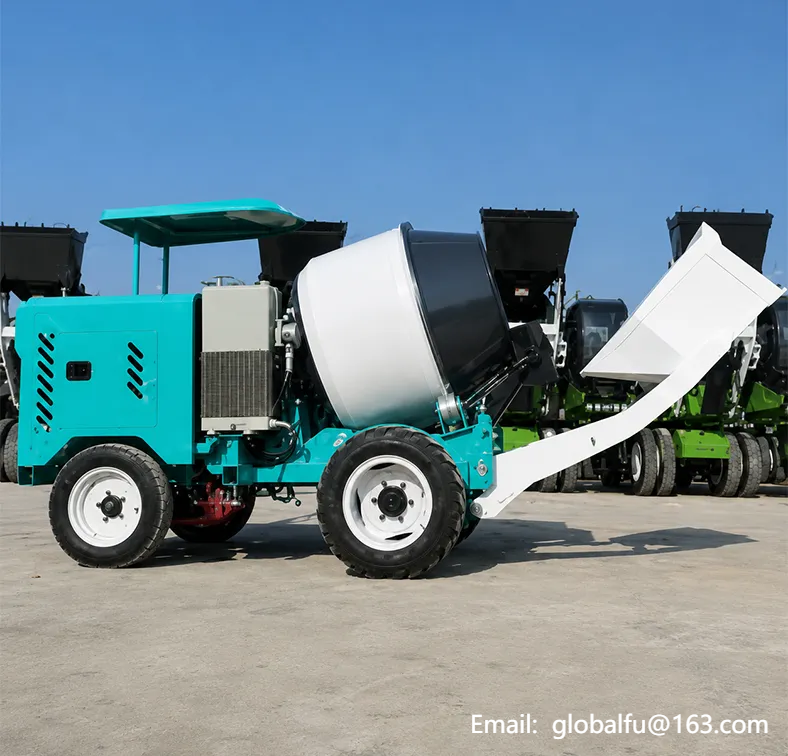
At the simplest level, a drum mixer rotates the materials until the concrete reaches the required consistency. Larger equipment may add a hydraulic loading shovel, water system, weighing function, rotating drum, driving chassis, and controlled discharge. This is why the term mixer for concrete can describe anything from a small portable unit to a mobile self-loading machine used on large construction sites.
What Are the Main Types of Concrete Mixers?
The types of concrete mixers vary because not every customer needs the same capacity, mobility, or material. A contractor pouring foundations has a very different need from a worker mixing mortar, grout, or stucco in a bucket.
Here is a practical comparison:
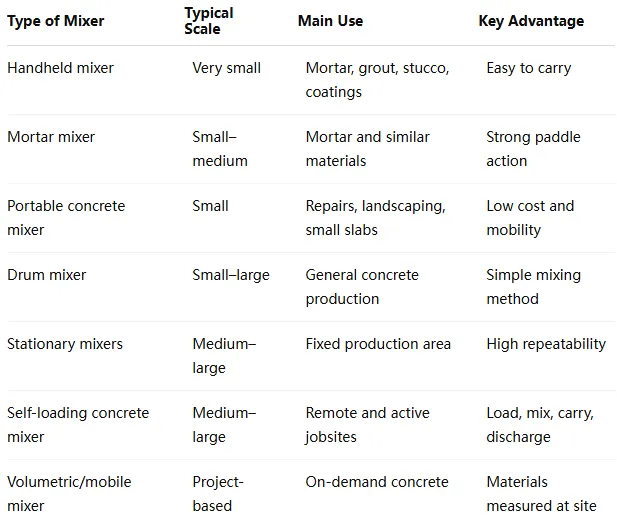
A handheld power mixer or handheld mud mixer may use a paddle to mix material inside a container such as a 5 gallon bucket. A paddle mixer can be useful for mortar, grout, stucco, adhesives, and similar materials. Search terms such as “paint mixer,” “electric handheld,” or “universal 2 blade paddle” often belong to this light-tool category rather than heavy concrete machinery.
At the other end of the market, Kaishun Machinery focuses on self-loading concrete mixers for international construction buyers. These machines are designed for projects that need a much higher level of independence than a small portable concrete mixer can provide.
Cement Mixer vs. Mortar Mixer: What Is the Difference?
People often use cement mixer and concrete mixer as if they mean the same thing. In everyday search language, that is common. Technically, however, cement is only one ingredient in concrete. Concrete usually combines cementitious material with water and aggregates.
A mortar mixer has a different job. Mortar normally uses finer material than structural concrete, so the mixer design can also differ. Paddle-based equipment is common when users need to mix mortar, grout, stucco, or similar materials. A drum-style mixer cement search, by contrast, often comes from someone looking for a machine to produce small batches of concrete.
The important lesson for buyers is not to choose equipment from the keyword alone.
Ask:
- Are you mixing mortar and concrete, or only concrete?
- What is the maximum aggregate size?
- Do you need a rotating drum or paddle action?
- How much material do you need per batch?
- Will the machine remain in one place?
- Does it need to travel across the worksite?
Electric, Gas-Powered, or Hydraulic Mixer: Which Power Source Is Better?
Small mixers may use an electric motor, gasoline engines, or manual power. An electric concrete mixer can be a simple choice when stable electrical power is available. Electric mixers are often preferred for indoor use or smaller jobs where exhaust emissions from an engine would be undesirable.
A gas powered concrete mixer or other gas powered portable machine offers more independence from the grid. Small units with gas engines can be useful where electricity is not available. Buyers comparing gas and electric mixers should look beyond purchase price and consider fuel supply, operating hours, ventilation, transport, maintenance, and local service.
Larger self-loading equipment uses a different system. A diesel engine normally provides the main power source, while the hydraulic system can operate loading, drum, discharge, and steering functions depending on machine design.
Do not compare mixers by motor horsepower or rpm alone. A powerful motor does not automatically mean higher real job-site productivity. Drum capacity, loading time, mixing quality, discharge speed, mobility, and operator workflow matter just as much.
How Do Cubic Capacity, Drum Size, and Batch Output Affect Selection?
Capacity is one of the most misunderstood mixer specifications.
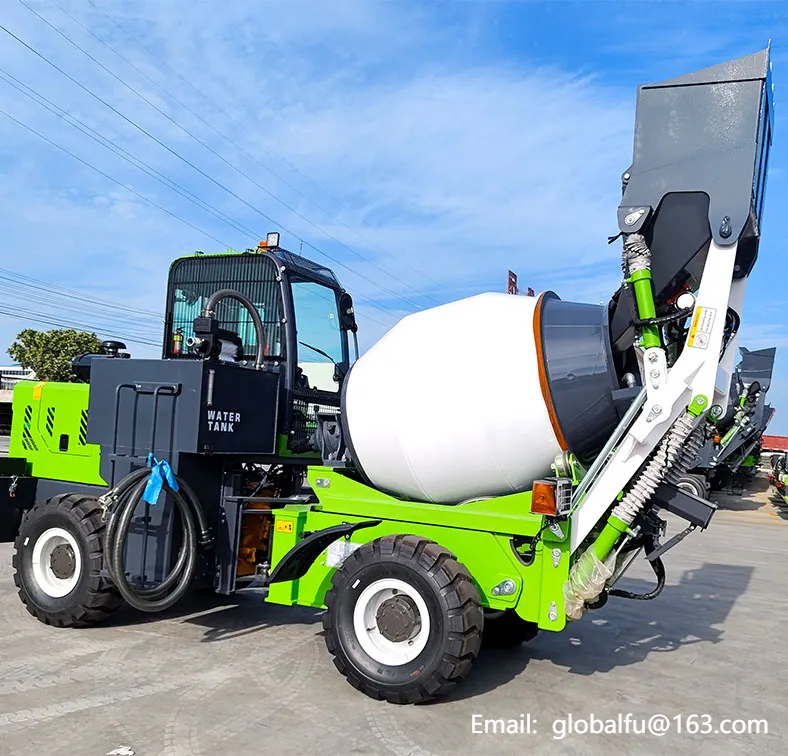
A machine advertised as 6 cu, 6 cubic, 9 cu, or 4 cubic ft may be describing drum volume rather than the amount of finished concrete it can produce in every cycle. Buyers should check what each capacity number actually means before comparing two models.
The same issue appears on larger machines. Drum geometric volume, usable mixing volume, and rated batch output may not be identical. That is why B2B buyers should request a clear technical sheet rather than making a decision from one large number in a product title.
For small projects, a large drum may simply create extra weight and cost. For major construction sites, a mixer that produces only smaller batches can become a bottleneck.
Consider four questions:
- How much concrete does the project need each day?
- How many batches can the operator realistically complete?
- How far must the machine travel between loading and discharge?
- Does the concrete need to be produced continuously?
If your crew only uses a few concrete bags, a small portable unit may be enough. If the project requires repeated concrete production throughout the day, a self-loading mixer can provide much greater independence.
Steel Drum, Poly Drum, Paddle, and Hopper: Which Design Matters?
The drum or mixing chamber directly affects how users work with the machine.
A steel drum is common in heavier construction equipment because it can handle demanding site conditions. Some compact portable mixers use a poly drum, which can reduce corrosion concerns and may be easier to clean for certain applications. Kushlan, for example, currently lists several polyethylene-drum models in its compact mixer range.
Paddle systems serve a different purpose. A paddle mixer or power mixer can move thick mortar, grout, stucco, or similar material through the mixing container. This is not the same mechanical process as a large rotating concrete drum.
Loading method matters as well. A small machine may require workers to lift aggregate, water, and cement by hand. Some users feed the drum from a wheelbarrow. Larger construction equipment can use a loading hopper or hydraulic shovel.
When comparing machines, look at the full material path:
Loading → measuring → mixing → travel → discharge → cleaning
That sequence often tells you more about real productivity than drum size alone.
How Do You Choose a Concrete Mixer for a Construction Project?
Start with the actual job, not with a model number.
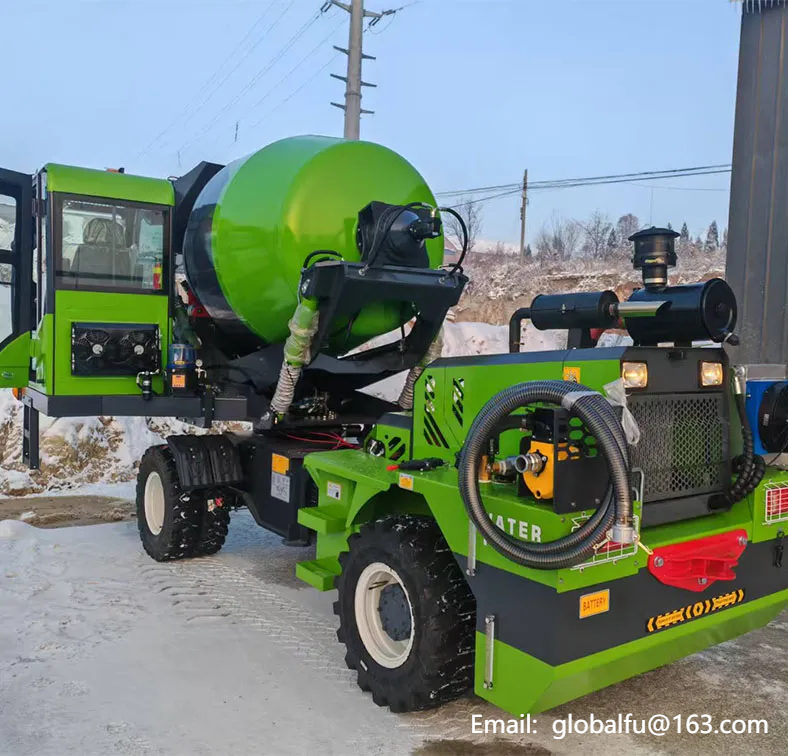
At Kaishun Machinery, we look at the customer’s project type, production demand, road conditions, labor availability, and equipment combination before discussing a suitable self-loading concrete mixer.
For each construction project, define:
- Required concrete output
- Aggregate type and size
- Daily operating hours
- Worksite terrain
- Travel distance
- Water availability
- Operator skill
- Loading method
- Discharge location
- Local fuel availability
- Transport limits
- Spare-parts requirements
Then ask whether the mixer will work alone or as part of a larger equipment fleet.
For example, an international infrastructure contractor may also require a wheel loader, rough-terrain forklift, telehandler, generator set, lowbed semi-trailer, or prefab site building. This is where Kaishun’s one-stop construction machinery model becomes useful. Instead of sourcing each machine from a different supplier, buyers can discuss integrated equipment procurement, OEM/ODM customization, shipping consolidation, spare parts, and after-sales support together.
How Should You Operate, Clean, and Maintain a Concrete Mixer?
A mixer that is easy to clean can save real labor over its working life. Fresh concrete should not be allowed to build up until hardened material reduces drum volume or affects moving parts.
Good daily care normally includes inspection, cleaning, lubrication where required, checking hydraulic lines, watching tires and brakes on mobile units, and inspecting the mixing and discharge system. Always follow the actual manufacturer’s manual for the selected machine.
Safety is equally important. In the United States, OSHA requires specific safeguards for concrete mixers with loading skips of one cubic yard or more, including a mechanical device for clearing material and guardrails on each side of the skip. OSHA also requires lockout/tagout when maintenance or repair on mixers could expose workers to unexpected equipment operation.
OSHA’s concrete safety guidance also warns workers about moving machinery, mixer drums, hoppers, cement dust, wet cement, and maintenance hazards. Requirements vary by country, so international buyers should check local regulations as well.
A simple maintenance habit is powerful: clean early, inspect often, and repair small problems before they become job-site downtime.
How Should B2B Buyers Compare Concrete Mixer Manufacturers and Prices?
Searches for mixers for sale, concrete mixer for sale, concrete mixer price, or concrete mixer machine manufacturer often bring up equipment that looks similar but belongs to very different classes.
Do not compare only the headline price.
For international B2B procurement, compare:
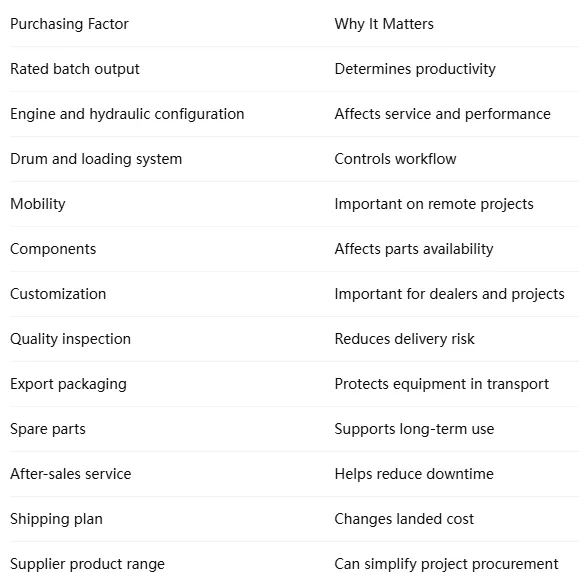
A cheap mixing machine that does not match the worksite can cost more in the long run through extra labor, poor output, and difficult support.
Kaishun Machinery serves construction contractors, EPC companies, equipment distributors, importers, rental businesses, mining projects, and private-label buyers. Our role is not limited to supplying one mixer. We can coordinate concrete machinery with other project equipment, OEM/ODM branding, consolidated shipping, spare-parts supply, and after-sales support.
That is especially useful for buyers in Russia, Australia, the Middle East, Southeast Asia, Africa, and other markets where logistics and technical support can be just as important as the purchase price.
If you are comparing a concrete mixer machine for a new project, send us your required batch output, project country, site conditions, concrete demand, and preferred configuration. Kaishun Machinery can help you evaluate the right equipment and prepare a project-based quotation.











 August 13, 2026