Kaishun Team | Kaishun Generator Set Technical Specialist | Published: August 5, 2026
A construction-site diesel generator set needs two decisions made correctly before anything else: the power rating class (prime or standby) and the kW range that covers your largest simultaneous load plus motor-starting inrush. Everything else — brand, tank size, enclosure — is secondary.
Prime Power vs. Standby: Get This Wrong and Nothing Else Matters
Most sizing guides on the market walk through this distinction in detail, and for good reason — it’s the single most common point of confusion buyers bring to a supplier.
Prime power rating describes a generator set built to run as the main power source for a variable load, for unlimited hours, with no fixed annual runtime cap. A construction site running its own
power for months at a time — no grid connection, or a grid connection too far away to be practical — needs a prime-rated set.
Standby power rating describes a generator set sized to take over during a grid outage. It’s rated to run at a higher output than the prime rating of the same physical unit, but only for a limited number of hours per year, because it’s not built for continuous full-load operation.
The practical difference on a jobsite: a prime-rated 200kW set and a standby-rated 200kW set are not interchangeable. If a site with prime-duty load patterns gets fitted with a standby-rated unit, the generator runs outside its duty cycle and the engine wears out faster than the warranty terms assume.
The Sizing Math, Step by Step
- List every piece of equipment that will draw power simultaneously — tower crane, concrete pump, welding sets, site lighting, office trailers, water pumps.
- Add up the running kW for that full load list.
- Identify the single largest motor on site (usually a crane or pump) and calculate its starting inrush — motor starting current typically runs 5–7 times the motor’s running current for a direct-on-line start.
- Divide the inrush kW by a safety margin (generators can handle short-term overload of roughly 2–2.5x rated output for a few seconds, so dividing by that factor gives you the minimum rated capacity needed to survive the start).
- Compare that starting-load-derived number against your running-load total from step 2, and specify to whichever number is larger.
- Apply a demand factor of roughly 0.6–0.75 if not all listed equipment runs at full output at the same time — this keeps you from over-specifying based on a load list that never actually peaks simultaneously.
- Confirm voltage and frequency against destination-market standards (50Hz/400V is standard across most of Asia, Africa, and Europe; 60Hz/480V applies in North America and parts of the Americas and Asia-Pacific).
Skipping step 3 is the single most common sizing mistake on construction sites — a generator sized only to the running load total will brown out or trip every time the crane or pump motor starts.
Four Engine Brands, One Supplier: Why That Matters for Sourcing
Sizing guides from single-brand generator manufacturers can only walk a buyer through configuring their own engine line. A site that needs Cummins for parts-network reasons in one country and Weichai for cost reasons in another has to work with two separate suppliers — or accept whatever a single-brand manufacturer has on the shelf.
Kaishun’s generator set lineup covers four engine brands under one manufacturing and export operation:
| Engine Brand |
50Hz / 400V Prime Power |
60Hz / 480V Prime Power |
Gas Genset Option (Natural Gas / Biogas) |
| Cummins |
16–2500kW |
20–3000kW |
300–1000kW |
| Weichai |
20–3000kW |
20–3000kW |
60–1500kW |
| Yuchai |
30–3000kW |
Available; specific 60Hz range to be confirmed at inquiry |
Not confirmed for publication — verify current specification with Kaishun before relying on it |
| Perkins |
8–1800kW |
8–1350kW |
Not offered |
Kaishun also supplies a Jichai-engine gas genset line (natural gas/biogas, 500–4000kW) alongside the diesel brands above, for sites where gas supply is already on the ground.
None of this replaces a supplier’s own load calculation — a construction contractor still needs to run the sizing math above before picking a kW figure from any of these ranges. What the multi-brand lineup changes is the second decision: once you know the kW number, you can match it to whichever engine brand has better parts availability, technician familiarity, or landed cost in your specific project country, without switching manufacturers.
A Common Misconception: “The Bigger Brand Name Means the Better Generator”
Buyers sometimes assume that choosing Cummins or Perkins over Weichai or Yuchai automatically means a more reliable machine. In practice, within the same prime-power class and duty rating, the deciding factor for jobsite reliability is usually the accuracy of the sizing calculation and the alternator/control-panel quality paired with the engine — not the engine badge alone. Brand choice matters most for a different reason: parts and service network coverage in the country where the generator will actually operate. A Cummins set in a region where the nearest authorized service point is 400km away is not automatically a safer choice than a Weichai set with a regional parts center 40km from the jobsite.
Configuration Options Beyond the Engine
Once brand and kW rating are settled, construction buyers typically choose among:
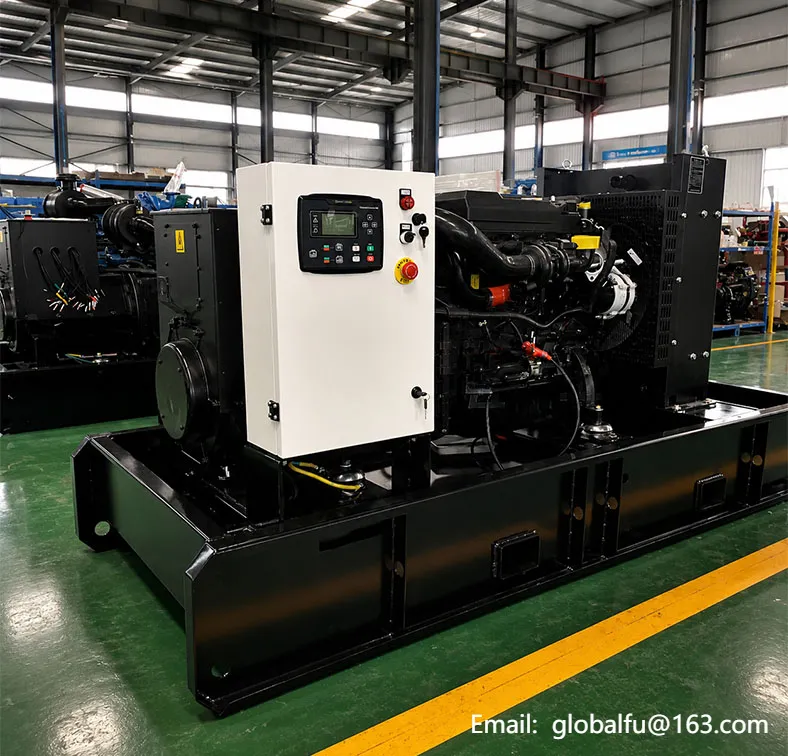
- Open type genset — lower upfront cost, used where noise regulations and weather exposure aren’t a concern.
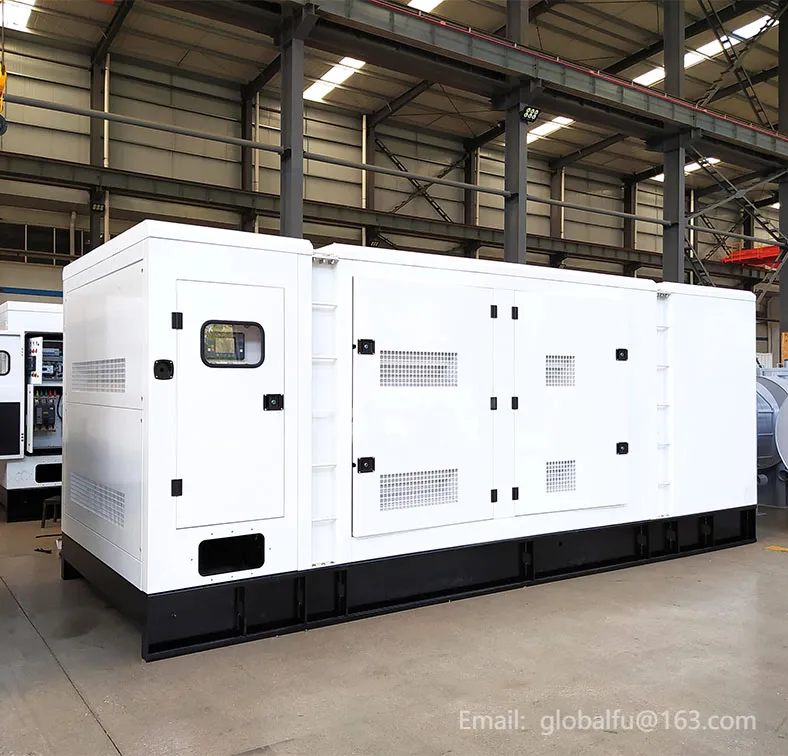
- Silent (soundproof enclosure) generator set — required for sites near residential areas or with contractual noise limits.
- Trailer diesel generator set — a towable configuration (50–1000kW range in Kaishun’s lineup) built for sites that relocate power between phases of a project or between project sites entirely.
- Containerized generator set — used where the unit needs to sit outdoors long-term with weatherproofing and a more permanent installed footprint than a standard enclosure.
A site that moves through foundation work, structural work, and finishing phases — each with a different physical location for the power source — is a natural fit for the trailer configuration, since re-siting an open or containerized unit repeatedly adds cost the trailer avoids.
Where the Multi-Brand Approach Runs Into a Real Limitation
Not every kW figure in the ranges above is a standard, off-the-shelf configuration across all four brands simultaneously. A buyer asking for an unusual combination — say, a 2800kW Yuchai set at 60Hz — should expect a supplier to confirm factory lead time and configuration availability before quoting, rather than assume every number in a published range ships as a stock item. This is the honest tradeoff of a multi-brand lineup versus a single-brand manufacturer that keeps a narrower, more standardized product run: broader brand choice, but individual combinations need factory confirmation rather than instant stock availability.
Pricing: What Determines the Number
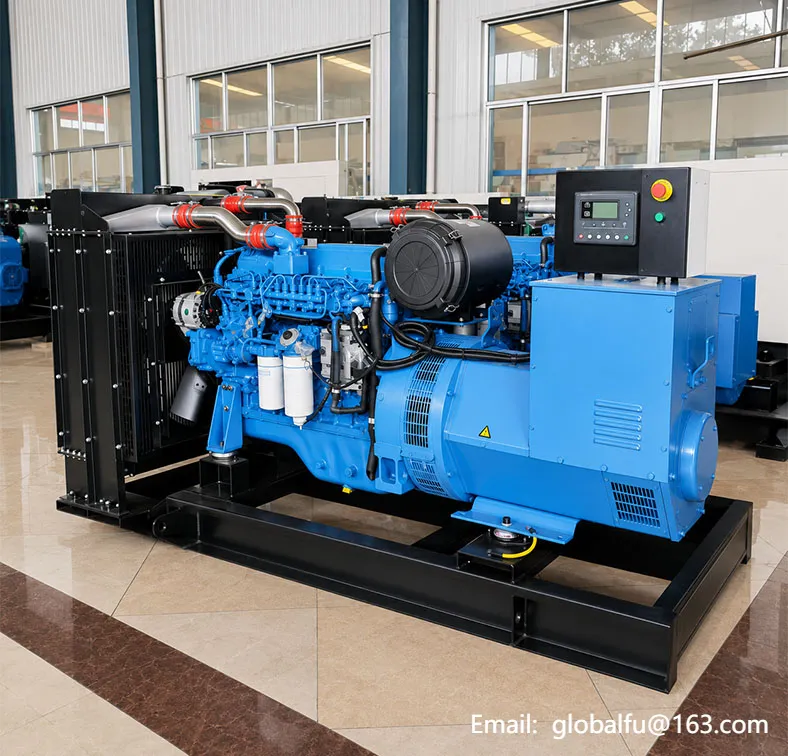
Diesel generator set pricing is not a fixed figure that applies across a kW range — it moves with engine brand, prime vs. standby rating, enclosure type (open, silent, containerized, trailer), control panel specification, order quantity, and shipping destination. Kaishun quotes pricing per configuration once these variables are confirmed rather than publishing a flat price list, since two generator sets with the same kW number can differ substantially in landed cost depending on brand and enclosure alone. Buyers comparing quotes across suppliers should confirm all six variables are matched before treating any two prices as comparable.
Certification: What’s Confirmed and What Isn’t
Kaishun states ISO 9001 quality management system certification and CE compliance at the company and product-category level, consistent with the quality management framework defined under the ISO 9001 standard. What isn’t published on a per-unit basis is a specific certificate number or issuing body tied to an individual generator set model — buyers who need that documentation for a tender or import requirement should request it directly from Kaishun before finalizing a contract, rather than assume a category-level certification statement covers a specific certificate number automatically.
With more than 20 years in construction machinery manufacturing and export to over 50 countries, Kaishun’s generator set line sits inside a broader one-stop equipment catalog that also includes concrete mixers and material-handling machinery — relevant for buyers sourcing power and mixing equipment for the same remote-site project together.
FAQ
Q: What’s the difference between a prime-rated and standby-rated generator set of the same kW number?
A: The standby rating allows a higher output than the prime rating on the same physical unit, but only for a limited number of hours per year. A construction site drawing continuous power for months needs the prime rating, not the standby figure, even if the standby number looks larger on a spec sheet.
Q: Can I mix engine brands across generator sets on the same project?
A: Yes — this is one of the practical advantages of sourcing from a manufacturer offering multiple brands. A project team might specify Cummins for one site with strong Cummins service coverage and Weichai for another site where that network is thinner, without switching suppliers.
Q: How do I know if I need a trailer or containerized configuration instead of an open-type unit?
A: If the generator needs to move with the project as work phases progress, or between separate project sites, the trailer configuration avoids repeated re-siting costs. If the unit will sit in one outdoor location long-term with weatherproofing requirements, containerized is the closer fit. Open type is the lowest-cost option where noise and weather exposure aren’t limiting factors.











 August 06, 2026